The Cinematic Notebook
The craft behind our portraiture and film development.
How This Notebook Connects to Film Photography and Film Development
Every article in this archive reflects the full analogue workflow used by Liquid Light Whisperer and Liquid Light Lab — from motivated lighting and optical rendering through to controlled development and high-dynamic-range scanning. The same discipline documented here is applied to commissioned portrait work and to every roll processed in the lab.

This Is How I Roll Film: Peter on Motion-Picture Stocks, Affordable Film and Getting the Most from ECN-2
Peter Gault from This Is How I Roll Film started from the same place many film photographers found themselves a few years ago: colour film was becoming harder to find, prices were rising, and shooting regularly was starting to feel less accessible. His answer was not simply to sell film, but to build a small independent range around stocks he already used, understood and believed in.

Candido Film in the Studio: ECN-2 Development, Exposure Index and Noir Lighting in Practice
I recently did a professional studio session produced in collaboration with Candido Collective, with Nadia Dutchak modelling and hair and make-up by Iryna Pasechnik. The objective was was to demonstrate how motion picture film behaves when exposure index, lighting structure, development chemistry and scanning are treated as one continuous workflow.
C-41 and ECN-2 Are Not Alternatives
The most persistent misunderstanding around C-41 and ECN-2 is the idea that they compete with one another. They do not.
C-41 and ECN-2 are not two routes to the same outcome. They are two fundamentally different photographic systems built to solve different problems. Treating one as a substitute for the other leads to disappointment not because either system fails, but because the wrong assumptions are applied.
Why Shoot ECN-2 Film Instead of C-41
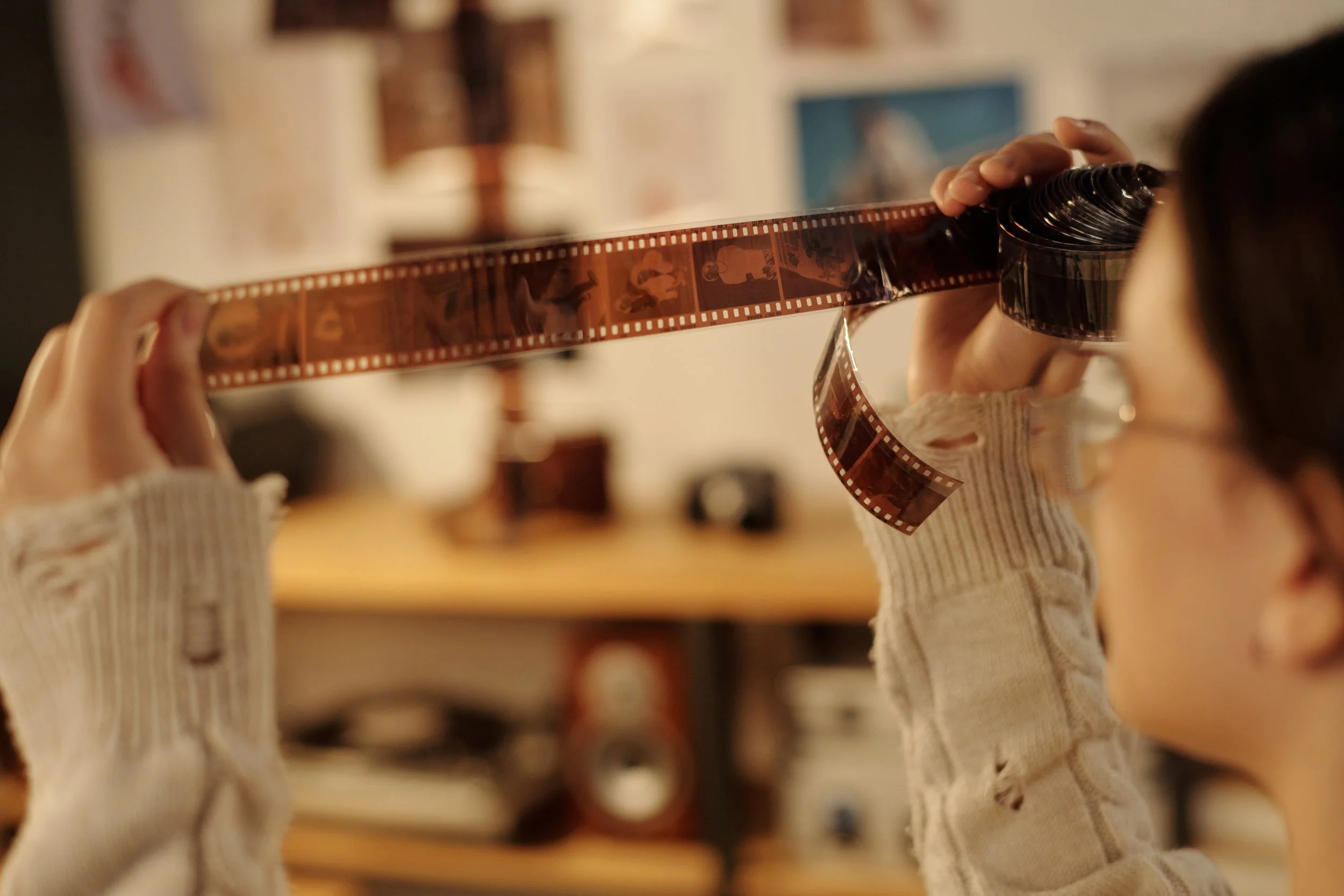
The correct question is not whether ECN-2 looks better than C-41. The correct question is why a photographer would choose a negative that deliberately withholds contrast and colour decisions, and what that choice enables.
ECN-2 does not reward unstructured use. It rewards intention. Photographers who choose it are not looking for chemistry to compensate for lighting or exposure decisions. They are choosing a system that assumes those decisions have already been made deliberately.
Push and Pull Film Processing Explained
Many photographers assume push and pull decisions only occur inside the camera, but metering differently is only the first half of the process. The exposure placed on the film creates the latent image, and then the lab determines whether that image becomes fully usable or collapses in the extremes. Rating Portra 400 at 1600, for example, under-exposes the film by two stops. The film does not become a 1600-speed stock; it simply receives less light. The tonal behaviour associated with pushing—deeper shadows, higher contrast, more pronounced grain—emerges in development, not at the moment of exposure. Pulling works the same way. Over-exposing the film provides additional highlight information, but only reduced development time preserves that latitude. Push and pull are therefore collaborative acts: the photographer controls exposure, and the lab controls interpretation.
Liquid Light Lab: Film Development and Scanning Across the UK
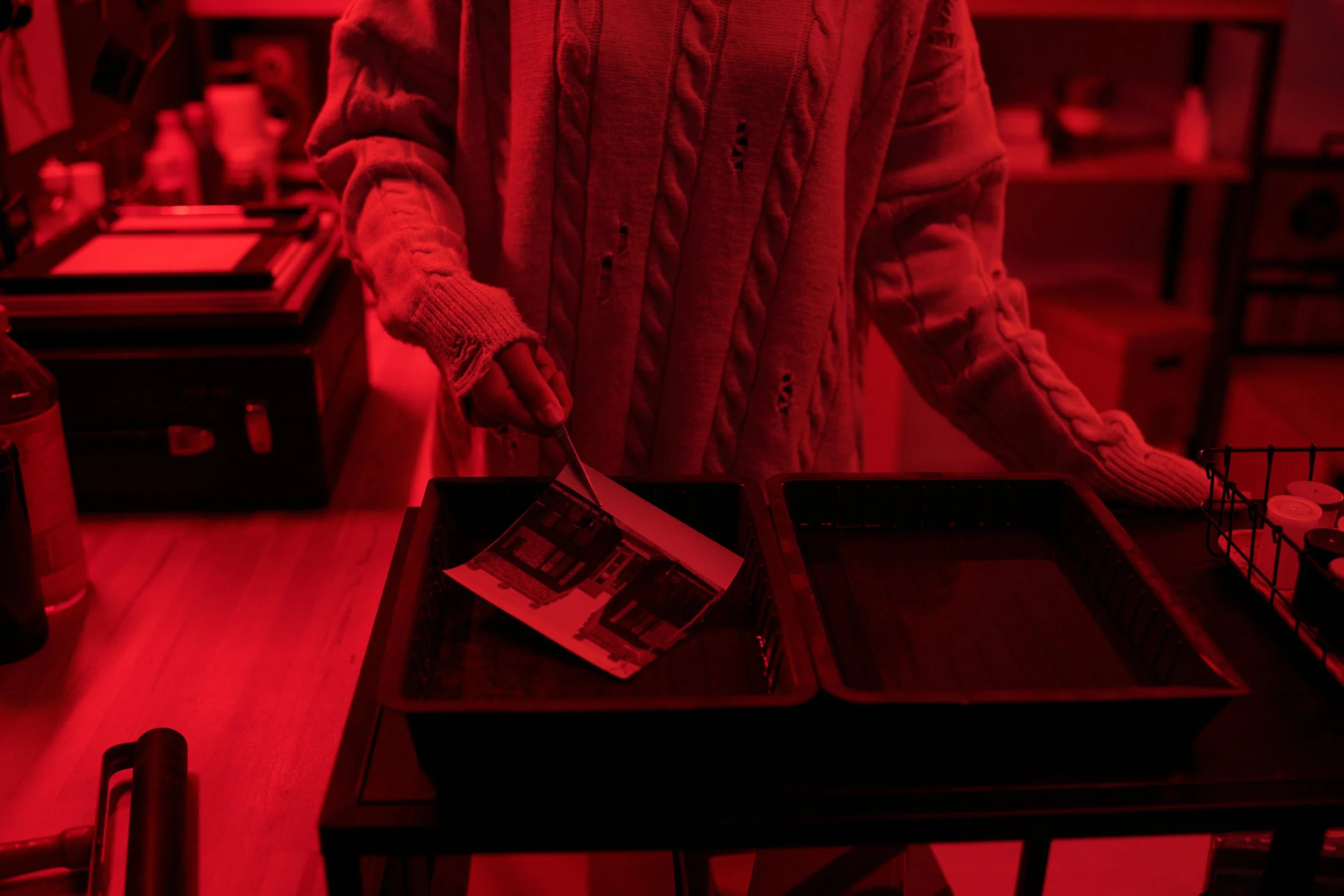
Liquid Light Lab processes 35mm C-41 colour negative film, ECN-2 cinema negative, and black and white film for photographers who care what happens after exposure. These are not separate services loosely grouped together, but connected stages within one photographic workflow. What happens in development affects what remains available in the scan, and what remains in the scan affects how convincingly the photograph carries through to the final file.
That applies whether the roll contains portrait sessions, wedding coverage, event work, editorial material, personal projects, or family frames that cannot be repeated. A negative only reaches its full value when the work that follows exposure receives the same seriousness as the exposure itself.

Why Resolution Matters: Getting the Most From Your Film Scans
Why film scan resolution and tonal depth matter, how Liquid Light Chamber differs from Noritsu and Frontier minilab scanners, and why Liquid Light Lab returns stronger 35mm scans for local and UK postal customers.

Why Film Photography Feels Alive in the Digital Era
Digital photography gave us precision, speed, and infinite repetition. It perfected the technical image — but in doing so, it stripped away something that analog never lost: a sense of life.
Film photography endures because it feels different. It slows us down, resists instant gratification, and produces images with texture and presence. In a world of disposable content, film stands out as something alive.
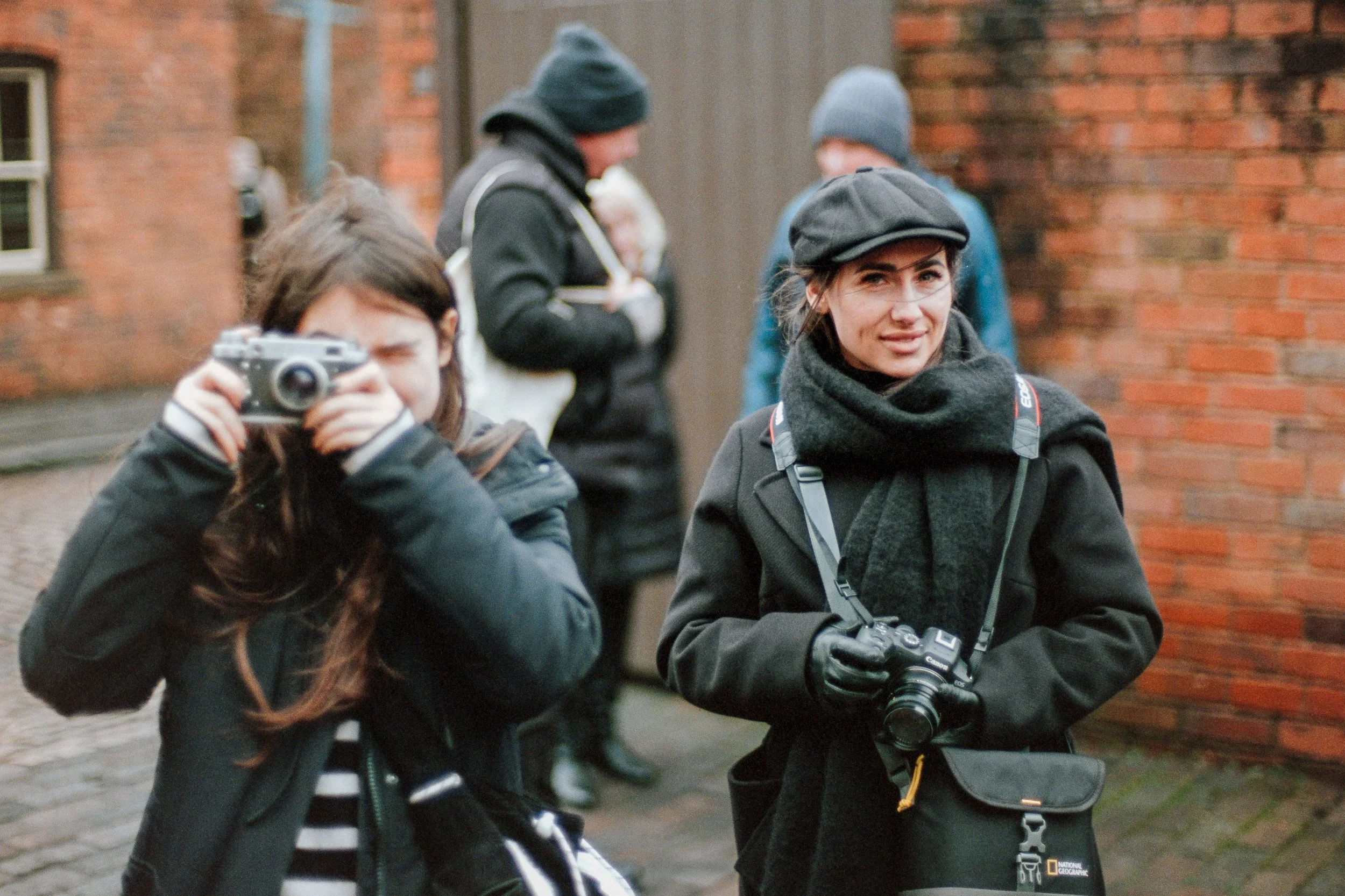
Liquid Light Lab: A UK Film Processing and Scanning Service from Leamington Spa
Liquid Light Lab is a UK film developing and scanning service based in Leamington Spa. The lab handles C-41, ECN-2, and black and white film through a controlled in-house workflow built around careful processing, strong scan quality, and consistent technical standards. That includes everything from disposable cameras and family rolls, to personal projects and regular film use.
Customers across the UK can post film in for development, or for development plus including images, with JPEG and TIFF files included in one download bundle.

The Lomography Daylight Developing Tank — My Final Impressions.
It’s not every day that a company like Lomography asks you to test a prototype. When their team invited me to run the new Daylight Developing Tank through its paces, I was genuinely pleased. Lomography has long been at the heart of keeping film culture alive worldwide, and being part of their R&D process — before the public even got a glimpse — was a privilege.
The result was a set of articles about my experience published across their international network in four languages.

The AGO Film Processor – A Modern Workhorse for Analogue Photographers
The AGO Film Processor bridges home development and lab-level consistency. From 510 Pyro to C-41 and ECN-2, it saves chemistry, compensates for temperature drift, and delivers repeatable, professional results at home. Not perfect, but a game-changer for anyone serious about film developing.