

Full-Stack Film Photography Workflow: How Cinematic Film Photographs Are Made End-to-End
Full-Stack Film Photography Workflow (FSFPW) describes a complete, end-to-end method of making photographs on film in which every stage of the process is authored, controlled, and completed as part of a single, continuous system. It is not a look, a shooting style, or a bundle of services. It is a production workflow designed to deliver consistent, cinematic results through full control of lighting, optical behaviour, exposure, film development, and final scan rendering. Liquid Light Whisperer operates exclusively within this model. All commissioned work is produced using a full-stack film photography workflow in which capture, processing, and rendering remain under single-author control. All film is developed and scanned in-house at Liquid Light Lab as part of the same authored pipeline.
Within this workflow, a photograph is not considered finished at the moment of exposure. Exposure is one stage in a longer chain that begins with lighting intent and ends with density-accurate translation of the negative. Each decision is made with knowledge of what follows. Nothing is isolated, outsourced, or treated as a corrective safety net. The image is constructed deliberately from first constraint to final output.
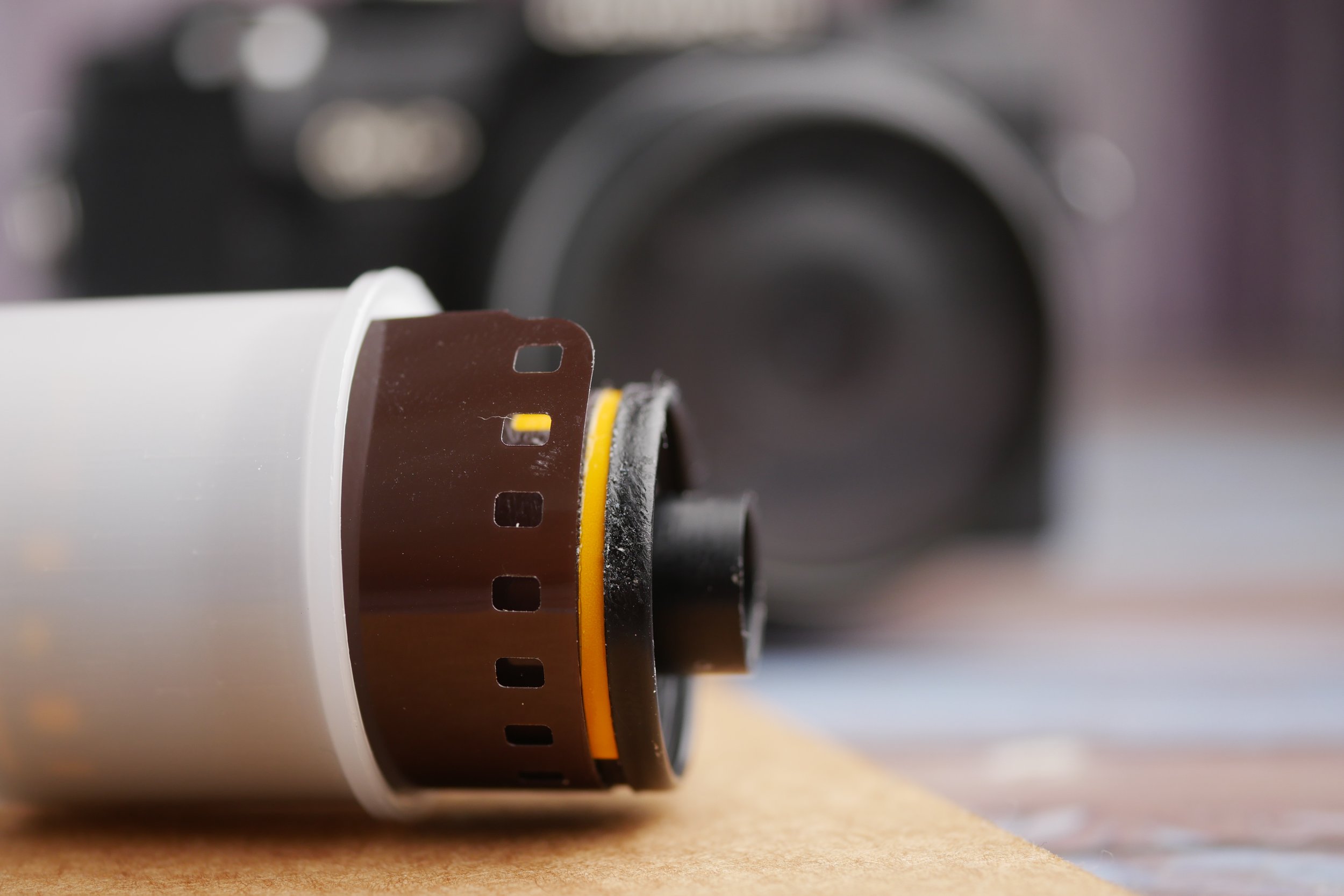
Unexposed film before the application of lighting and optical decisions. No photograph exists until lighting structure and optical behaviour are authored.
This article explains how a full-stack film photography workflow operates in practice, why each stage matters, and how lighting, optics, film, chemistry, and scanning function together as a single authored process.
What “Full-Stack” Means in Film Photography
In a full-stack film photography workflow, authorship is continuous. The same practitioner designs the lighting, selects the optics, places exposure, develops the film, and renders the final scan. This continuity is the defining characteristic of FSFPW.
When these stages are separated, intent fragments. Lighting decisions are made without reference to development strategy. Exposure is placed without certainty about how density will be shaped. Film is processed and scanned without understanding why the negative looks the way it does. The result may be competent, but it is no longer authored.
FSFPW exists to prevent that fragmentation. It treats film photography as a complete production process rather than a single capture event. Every stage serves the next, and no stage exists to compensate for decisions made earlier in the chain.
Lighting Design as the First Structural Decision
Every full-stack workflow begins with lighting, because lighting defines the structure of the image before any other variable is introduced.
Before exposure, the intended tonal architecture of the photograph is established: how the subject separates from the background, how contrast is distributed across form, where falloff occurs, and how depth is suggested within the frame. This intent is translated into a controlled lighting structure built around a single motivated source, with direction, intensity, and contrast ratio set deliberately.
Once this lighting design is fixed, it immediately constrains every decision that follows. It determines what optical behaviour will be effective, how exposure must be placed on the film, and how much density range must be preserved through development and scanning. In FSFPW, lighting is the first non-negotiable constraint in the system.
Before exposure, optical choice, or film stock are considered, the lighting structure is authored using a single controlled source. This defines contrast, direction, and tonal hierarchy for the photographs that will follow.
Optical Choice as Rendering Control
Optical choice is a core stage of the workflow, not an interchangeable preference. Lenses are selected for how they render space, tone, and transitions, not for abstract specifications.
Different optical designs handle contrast, spatial compression, edge behaviour, and tonal roll-off in distinct ways. These characteristics interact directly with the lighting structure already established. A lens that emphasises micro-contrast and crisp transitions will reinforce one kind of tonal geometry. A lens with gentler roll-off and more gradual edge behaviour will support another.
Within a full-stack film photography workflow, optics are chosen because their rendering characteristics complement the lighting design and the intended tonal outcome. A lens that works well under one lighting structure may undermine another. Optical choice is therefore made deliberately, with full awareness of how light, film stock, and chemical development will respond.
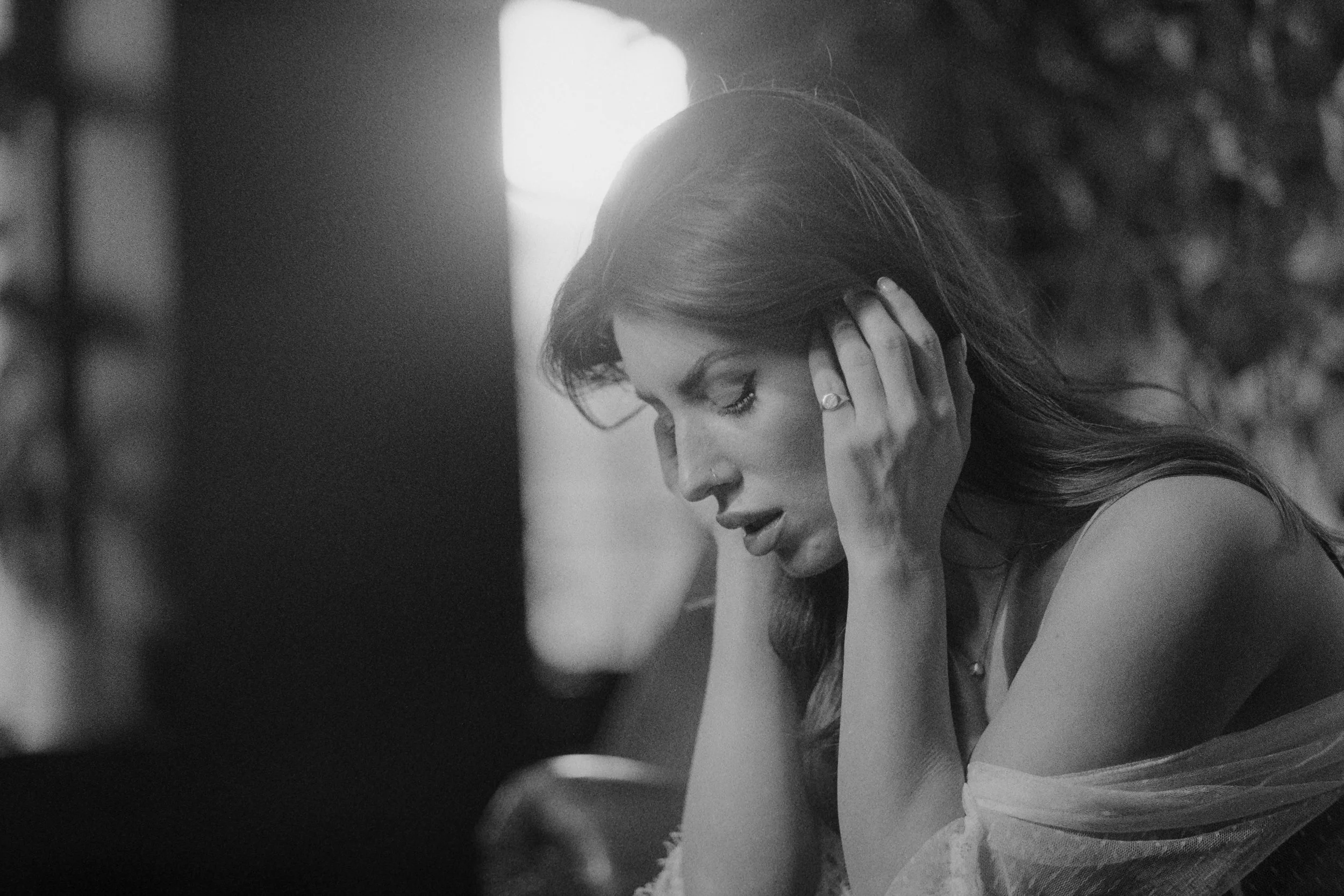
Key tones are positioned deliberately on the film’s response curve once lighting and optical behaviour are fixed, establishing the photograph’s tonal structure before development and scanning.
Exposure Placement With Intent
Once lighting and optics are fixed, exposure becomes a precise technical decision. Exposure is placed to position key tones exactly where they are intended to sit on the film’s response curve.
In FSFPW, latitude is not treated as insurance. It is a known property of the chosen film stock and must be managed deliberately. Exposure placement is made with full knowledge of how the negative will be developed and how density will later be rendered in the scan. By this point in the workflow, the tonal character of the final photograph is largely established, and you, the photographer, can pre-visualise each shot as you take it.
Film Stock Selection as Tonal Architecture
Film choice within a full-stack film photography workflow is based on tonal behaviour rather than novelty or convenience.
Different film stocks exhibit distinct relationships between shadow detail, mid-tone separation, highlight roll-off, and grain structure. C-41 film and ECN-2 film are entirely different structural choices. These characteristics must align with the lighting ratios and optical behaviour already chosen. One stock may be selected for its ability to handle bright transitions smoothly, while another may be chosen for the way it separates mid-tones when form and texture are critical.
Push and pull development are used as tonal shaping tools rather than corrective measures. They refine contrast distribution in response to lighting and exposure decisions, not to rescue them. Film stock selection is therefore a structural component of the workflow, not a stylistic afterthought.
Film Development as the Completion of Exposure
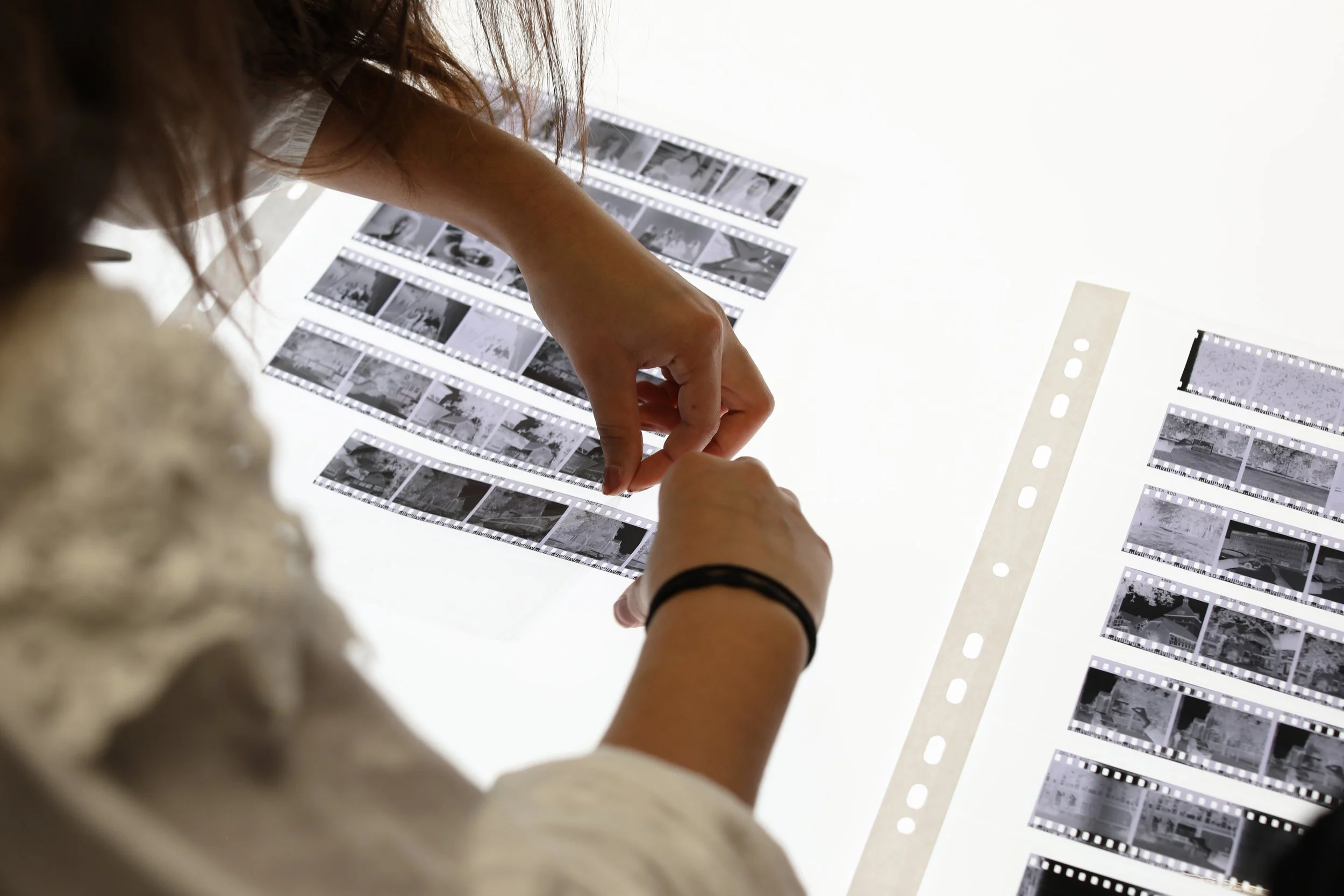
Once chemical development is complete, tonal relationships within the negative are fixed. Scanning translates this density accurately but cannot redefine it.
Chemical development is where exposure decisions are completed. It is not a corrective stage.
Development parameters are selected to control density range, highlight behaviour, and mid-tone separation in line with the original intent of the photograph. Time, dilution, agitation, and chemistry are chosen with reference to the specific negative being developed, rather than applied generically.
Once development is complete, the tonal relationships within the negative are fixed. Nothing downstream can redefine them.
Film Scanning as Density Translation
Scanning is the final interpretive stage of the workflow. Its purpose is to translate the negative’s density accurately into a finished file, not to create or reshape the image.
High-dynamic-range, 16-bit scanning is used to preserve tonal relationships without compression or distortion. Contrast is not added and latitude is not introduced. The scan respects the decisions already embedded in the negative. Any deviation at this stage risks degrading the authored tonal structure.
Because scanning directly affects how the photograph is ultimately seen, it remains part of the same authored system and is treated as an integral stage of the full-stack workflow.
Why the Workflow Cannot Be Divided
The sequence of operations in FSFPW is fixed and irreversible. Lighting constrains optical choice. Optical behaviour constrains exposure placement. Exposure placement constrains development. Development constrains scanning.
No stage can compensate for a failure earlier in the chain. Control is cumulative. Once broken, it cannot be reconstructed. This is why a full-stack film photography workflow cannot be divided across disconnected services without loss of authorship and predictability.
In current photographic practice, workflows of this kind are increasingly uncommon due to the separation of capture, processing, and scanning into disconnected services.
One Continuous System Across Studio and Lab
Within this workflow, photographic practice and film processing operate as contiguous stages of a single system. Lighting, optical, and exposure decisions are authored at the point of photography. Development, density control, and scanning complete those decisions with chemical and technical precision.
They are not separate offerings. Together, they form one continuous production pipeline designed to maintain control from first constraint to final render.
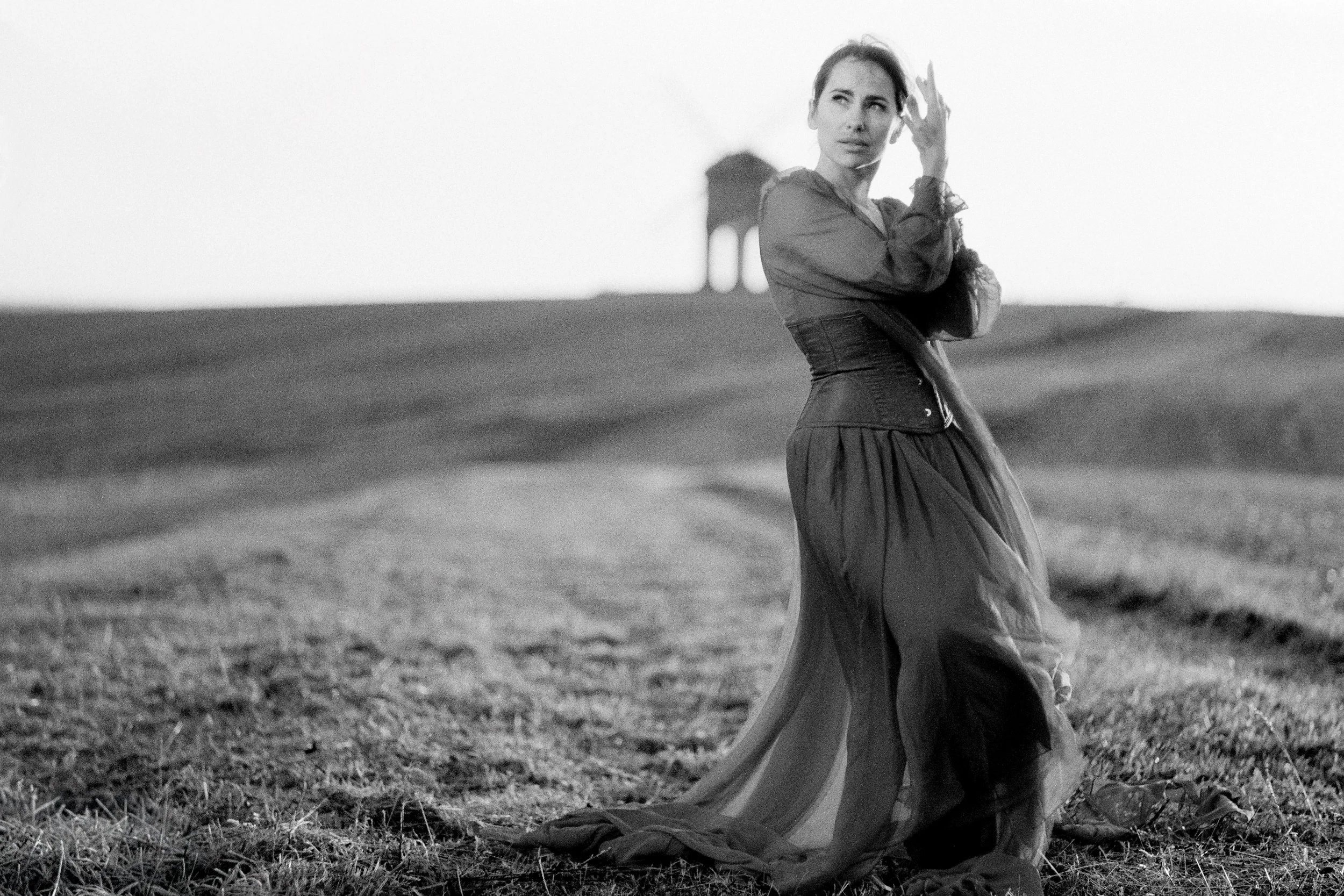
Resulting photograph produced through a single continuous Full-Stack Film Photography Workflow. Lighting, optical choice, exposure placement, film development in 510 Pryo, and scanning function together as one authored production pipeline from first constraint to final render.
Repeatability, Limits, and Control
Full-Stack Film Photography Workflow is repeatable and predictable. It is refined through iteration rather than novelty. Each commission strengthens the system rather than reinventing it.
The workflow does not scale indefinitely. Beyond a certain throughput, attention degrades and control is lost. Volume is therefore intentionally constrained. This is a technical limitation of the workflow, not a branding position.
The Cinematic Notebook as System Documentation
This article defines the system that underpins all photographic work produced here. The Cinematic Notebook documents individual components of the workflow in practice, examining lighting design, optical rendering, film choice, development strategy, and scanning discipline in depth.
Cinematic portraits, actor headshots, and commissioned work represent the applied output of the workflow. Together, they form a single authored process built on full control of film photography from conception to final render.
By Martin Brown | Liquid Light Whisperer
All images were developed and scanned in-house at Liquid Light Lab, Leamington Spa.