

Voigtländer Nokton 50 mm f/1.1 Review: Cinematic Rendering on Film for Portraits, Weddings, and Events
The Voigtländer Nokton 50 mm f/1.1 in M-mount is one of the few modern lenses built with an analogue-era expressive mindset. It is a tool designed to build atmosphere, depth, and tonal weight on film. In portrait sessions, weddings, and low-light events, it behaves with the authority needed for authored image-making. Used on the Leica M3 Double-Stroke as a mechanical work surface, the lens becomes a precise instrument for drawing scenes with intention and harnessing motivational light—whether shaped by controlled artificial lighting, directional window light, or mixed sources structured for coherence.

The Voigtländer Nokton 50 mm f/1.1 in M-mount. A fast, dense, deliberately expressive lens designed for cinematic film work across portraits, weddings, and low-light events.
Optical Behaviour in Colour: Dense Tonality and Cinematic Transitions
In colour work, the Nokton delivers a palette suited to cinematic portraiture. Saturation remains disciplined, allowing motivational light to define structure rather than relying on aggressive contrast. At wide apertures, the reduced micro-contrast gives scenes a cohesive mid-tone body, while highlights maintain a gentle glow without collapsing detail.
For wedding portraits, this behaviour is exceptionally useful. The lens handles white fabrics, skin tones, and environmental colours with a consistency that scans well through the Liquid Light Lab’s high-dynamic-range workflow. The resulting negatives carry depth and latitude, giving the scan meaningful tonal material to interpret.
Event photographers who work on film will find the Nokton’s ability to maintain colour shape in extremely low light particularly strong. Its f/1.1 aperture allows exposure discipline in spaces where other lenses fail to provide workable depth.

Ella Rue on Vision3 film with the Voigtländer Nokton 50 mm f/1.1. The lens’s wide-aperture colour response and atmospheric depth show how it builds cinematic presence and tonal weight in portrait work.
Black & White Rendering: Sculptural Planes and Tonal Integrity
In black and white, the Nokton behaves with controlled expressiveness. Shadow detail holds cleanly while retaining sculptural mass. The way the lens transitions from plane to plane echoes the mid-century tonal discipline explored throughout the Notebook.
At f/1.1–f/1.4, black-and-white negatives gain an atmospheric separation that works beautifully with pyro-based development and classic emulsions. This is the region where the lens contributes most clearly to analogue cinematographic portraiture. It draws the subject forward without abandoning the environment, anchoring the tonal structure around the motivational light design.
For actors’ headshots, bridal portraits, and intimate boudoir sessions, this tonal shaping is invaluable. It supports emotional immediacy without sacrificing depth.

Backlit coastal scene on 35 mm film with the Voigtländer Nokton 50 mm f/1.1. Even in hard contrast and moving water, the lens holds tonal structure and environmental depth, showing how its rendering remains expressive outside even for casual day trip photographs.
Depth of Field Across the Aperture Range
The defining characteristic of the Nokton 50 mm f/1.1 is its ability to shape depth.
At f/1.1, the plane of focus becomes extremely fine, yet on a properly aligned Leica M5 rangefinder it is precise and reliable. If you work deliberately, the lens rewards intention with sculptural isolation that feels cinematic rather than decorative. It allows you to direct the viewer’s attention with clarity.
At f/2, the lens gains structural discipline. This is the aperture range most useful in environmental portraiture, wedding preparations, couple shots, and reception images—where separation is needed, but the environment still must breathe.
By f/4, the lens behaves in a more conventional manner while retaining its expressive tonal transitions. It never becomes clinical; the drawing remains authored.
For photographers documenting evening receptions or dimly lit venues on film, this flexibility is operationally important. You can shoot into deep low light without giving up the ability to shape focus and atmosphere.

Indoor black-and-white 35 mm film portrait of a father and daughter, photographed with the Voigtländer Nokton 50 mm f/1.1. The lens captures clean tonal structure and balanced ambient light, demonstrating how it remains usable even with 100-speed film in indoor settings.
Handling and Build Quality: Designed for Practical Use
The Nokton’s mechanics are one of its strongest attributes. The clicked aperture ring is firm and precise—critical when working with exposure discipline on film. It allows confident operation in fast-paced environments, such as wedding mornings and event reportage.
The focusing movement is smooth, weighted properly, and encourages deliberate placement. The build quality is dense and resilient, well suited to repeated professional use, field shooting, and the kind of physical workflow required in documentary-heavy wedding or event assignments.
This is not a delicate lens; it is built for work.
Rendering and Scene Construction: Atmosphere With Authority
The Nokton draws scenes with intention. It shows commitment to depth, contrast, and the interplay between motivated highlights and structured shadow. It reveals form without forcing crispness or introducing the clinical sterility that can remove atmosphere from film-based portraiture.
Its flare behaviour is expressive but controlled. When motivational light includes windows, practical lamps, or backlights placed for structure, the Nokton complements the design. The rendering supports the atmosphere you build rather than overriding it.
In portraits, the lens contributes weight and presence. In weddings, it helps translate fleeting moments into images with tonal integrity. In events, the f/1.1 aperture keeps the film workflow viable in lighting conditions where most lenses fail.
This is an optical tool for anyone who sees depth, light, and narrative structure as the core of their craft.
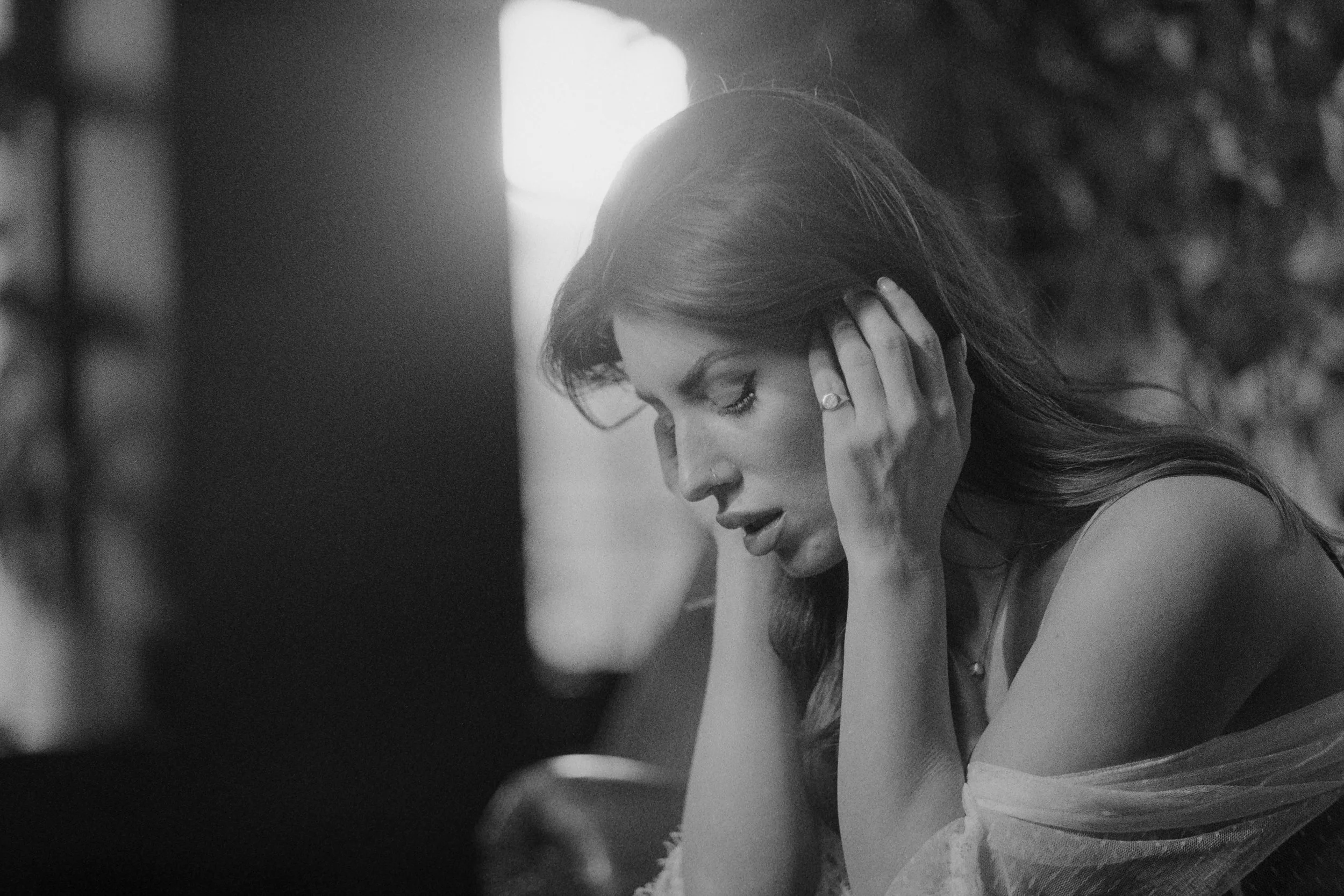
Ella Rue, photographed on 35 mm film with the Voigtländer Nokton 50 mm f/1.1. The lens’s wide-aperture depth, tonal cohesion, and expressive rendering show how it brings atmosphere and narrative weight to portrait work.
What Makes This Cinematic
1. Tonal Cohesion Under Motivational Light
The lens responds predictably to shaped light—whether one source or several—maintaining clarity in highlight edges and depth in shadows. This is the foundation of cinematographic structure.
2. Depth of Field as Narrative Control
At f/1.1 the lens provides an authored separation that mirrors cinema’s use of selective depth. It guides the viewer’s attention exactly where you need it.
3. Expressive Rather Than Clinical Drawing
Edges roll gracefully, backgrounds diffuse in a controlled manner, and transitions carry weight. This supports emotional tone and visual presence.
4. Negative Density and Scan Latitude
The optical behaviour delivers robust negatives that withstand rigorous scanning. This is important in wedding and event conditions where lighting variability can be extreme.
5. An Identifiable Optical Signature
Cinematic stills rely on consistency. The Nokton 50 mm f/1.1 has a recognisable signature without imposing an overpowering aesthetic. It supports the photographer’s authorship rather than dictating it.
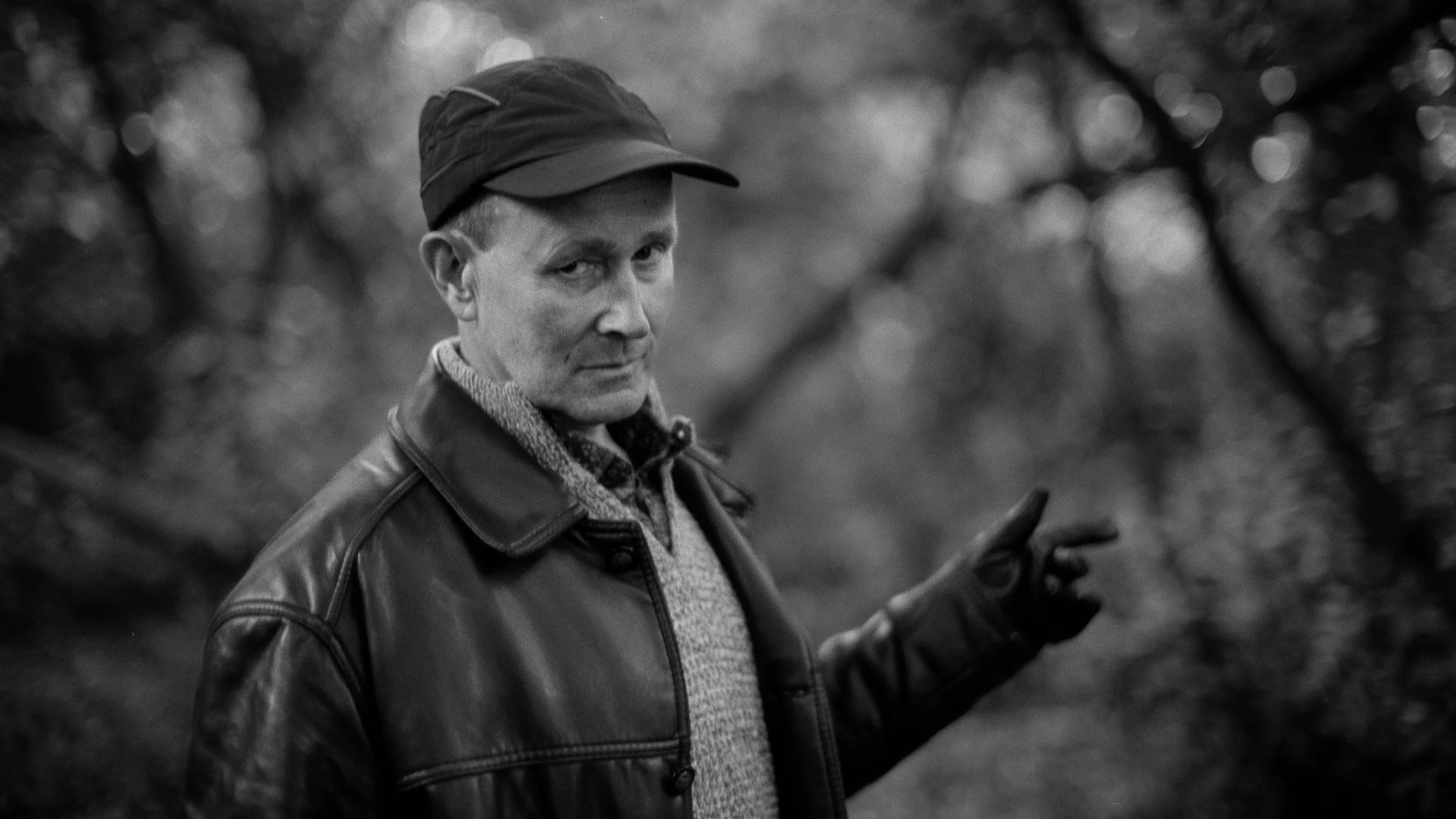
Simon Bamford, known for his role in Hellraiser, photographed on 35 mm film with the Voigtländer Nokton 50 mm f/1.1. The lens’s atmospheric depth and tonal discipline demonstrate its strength in professional portraiture and character-driven work.
Where This Lens Excels Professionally
For portrait photographers, the lens offers atmosphere and tonal integrity across an entire session.
For wedding photographers working on film, it provides a usable workflow from morning preparation to late-night reception.
For event photographers, its low-light performance keeps film viable where other optics collapse into unusable apertures.
The Nokton’s value lies not in perfection but in its ability to help you construct authored, cinematic images across diverse lighting conditions. As a full-stack analogue workflow photographer—lighting, exposure, lab development, scanning, and printing—this is a lens I can rely on completely when the work has to perform across every element of the photographic chain.
By Martin Brown | Liquid Light Whisperer
All images were developed and scanned in-house at Liquid Light Lab, Leamington Spa.