

Directional Light on Film: The Foundations of Depth, Shape, and Tonal Control (Part I)
A technical and historical introduction to controlled directional light in analogue portraiture
This article begins a multi-part series on chiaroscuro lighting for film-based portraiture. Each section develops a specific layer of the method: the historical foundations, the mechanical principles, the behaviour of film stocks under controlled contrast, the use of modifiers and environmental control, metering discipline, colour and density management, and the continuity between classical portrait lighting and mid-century cinematographic systems.
The purpose of this first part is simple: to establish a clear, practical framework for chiaroscuro as a structural lighting system. The goal is not to romanticise the term or place unnecessary weight on history. Instead, the intention is to explain what chiaroscuro is in plain terms, how it functions mechanically, and why film responds so predictably to this form of illumination. This article forms part of the Full-Stack Film Photography Workflow (FSFPW), which defines the complete production system used across all work shown here.
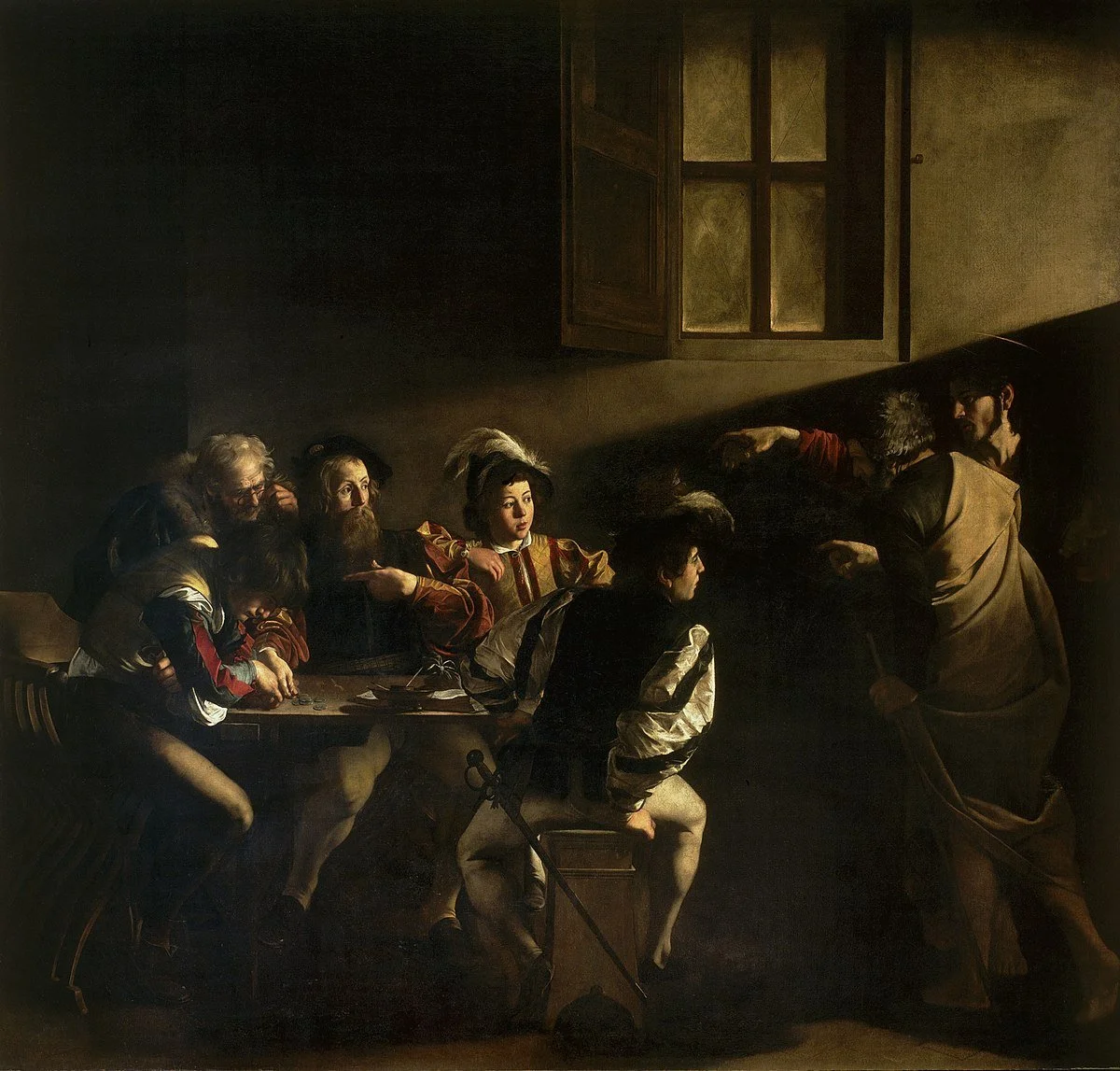
Caravaggio’s The Calling of Saint Matthew — the definitive classical example of chiaroscuro. A single directional source establishes the geometry of the scene, defining form through controlled illumination and shadow. This same structural logic underpins chiaroscuro portraiture on film.
FOUNDATIONS OF CHIAROSCURO ON FILM
Chiaroscuro is the controlled use of directional illumination to create depth, dimensionality, and tonal separation inside a portrait. The term is sometimes used loosely to describe dramatic or shadow-heavy images, but that simplification does not describe its real function. Chiaroscuro is not an effect. It is not an aesthetic layer applied to an image. It is a precise lighting system that defines the physical structure of a portrait through the relationship between illuminated planes and shadow planes.
In its classical origins, chiaroscuro emerged from painters who shaped figures using a single strong source and disciplined falloff. The technique appears in Caravaggio’s directional beams, Rembrandt’s sculptural modelling, and Joseph Wright of Derby’s experimental scenes lit by a single luminous object in darkness. But in the context of photography—especially analogue photography and film making—the technique matters for a different reason: it provides a stable method for shaping form using controlled contrast, predictable geometry, and intentional tonal placement.
Film Records Light as Structure
On film, chiaroscuro gains depth because every tonal value becomes a physical density on the negative. Digital sensors interpret tonal information through algorithms, analogue-to-digital conversion and dynamic mapping. Film does not. Film records light as chemistry-driven density. Once an exposure is made, the relationship between highlights and shadows is locked into the physical grain structure of the emulsion.
This has several consequences:
The contrast structure is stable.
Once captured, the shape of the illumination cannot drift or remap itself.Shadow information does not collapse.
Even near-black scans contain usable detail in the emulsion.Highlights retain integrity.
Unlike clipped digital highlights, film compresses upper values smoothly.Midtones carry the expressive weight.
Film’s characteristic curve preserves human skin tones predictably.
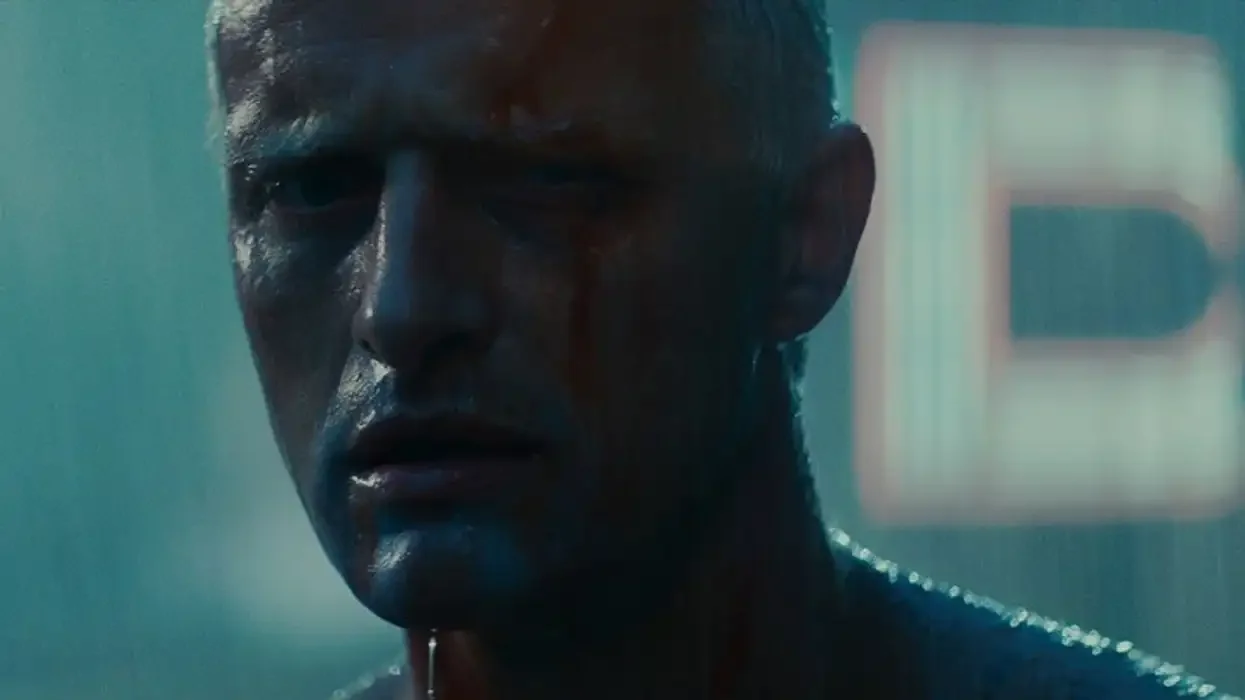
Rutger Hauer as Roy Batty in Blade Runner (1982).
A perfect modern example of chiaroscuro: a motivated key source, sculpted falloff, and controlled shadow density.
This behaviour makes film uniquely suitable for chiaroscuro because the technique relies on predictable relationships between light and shadow. When that relationship is stable in the recording medium, shaping becomes far more reliable.
Why Film Handles Chiaroscuro Better Than Most Modern Photography Practices
The dominant lighting habits in much of contemporary photography favour broad, even illumination. This produces images with weak shadow structure, minimal falloff, and reduced directional logic. Chiaroscuro requires the opposite approach. It depends on:
a single directional source
intentional shadow density
controlled falloff
defined planes
stability in low zones
Film stocks such as Rollei RPX 100, RPX 400 and the Kodak Vision3 cinema stocks have the latitude and tonal stability to hold detail deep into these zones. Shadows that appear heavy or deep in the final scan remain structured and textural on the negative. The depth is intentional, not a failure of exposure.
Film’s physical response curve makes these decisions predictable. Once light shapes the subject, the negative records that structure as density, not interpretation. The relationship between highlight, midtone and shadow becomes fixed and coherent.
This is why chiaroscuro works so effectively on film: it uses the medium’s natural strengths—stable shadows, smooth rolloff, and reliable midtone behaviour—rather than fighting against them.
Directional Illumination as Geometry
The core of chiaroscuro is geometry. Every portrait is shaped by the angle, distance, height and behaviour of a single motivated light source. That source determines:
the path of illumination
the location and density of shadows
the clarity of transitions
the viewer’s perception of three-dimensional depth
A high, angled source strengthens the brow ridge and jawline. A lateral source emphasises cheekbones and nasal shape. A lower source reduces vertical structure and creates a flatter, more compressed appearance. These effects are not interpretive. They are mechanical outcomes of light direction.
Once a directional choice is made, the lighting system becomes a closed set. Every adjustment must reinforce the original architectural decision. Strengthening the source, modifying its spread, adding or removing fill, flagging spill—all must support the primary direction. In chiaroscuro, inconsistency is visible instantly. A second unmotivated light destroys the shape. Spill contamination reduces depth. Reflected light from walls, ceilings or clothing can weaken transitions.
This is why chiaroscuro is seen as a disciplined method: it requires the photographer to build structure step by step, not improvise it.
Shadow as Structure, Not Absence
The shadow plane is not a by-product of the key light. It is an active component of the portrait. A shadow that is placed intentionally reveals the same structure as the illuminated side—it simply describes that structure with absence rather than presence. In chiaroscuro:
shadows carry information
shadows shape depth
shadows define edges
shadows balance the composition
shadows provide visual silence
Film supports this behaviour. A deep shadow in a final scan may look almost black, but the negative contains texture and tone. This allows you to sculpt the subject with confidence: the shadow plane will remain textural as long as exposure is placed with intent.
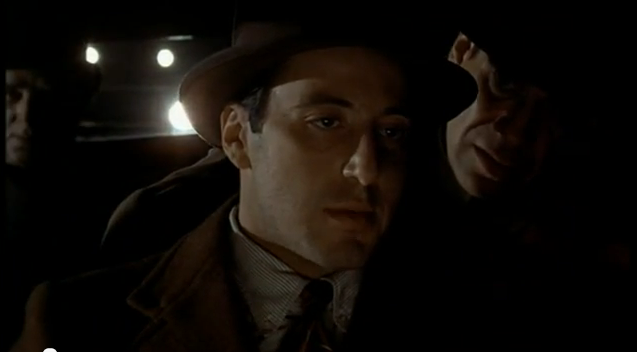
Chiaroscuro used as narrative structure: a single motivated source shapes Michael Corleone’s face while the surrounding figures fall into controlled shadow. The frame shows how directional light, falloff and selective visibility build presence and depth—exactly the same principles applied in portraiture on film.
Reflectors, negative fill, flags, cutters, barn doors and modifiers are used to control the shadow plane, not eliminate it. A reflector adds controlled lift without flattening contrast. Negative fill increases density and tightens the ratio. Flags remove spill and maintain directionality. These shaping tools ensure that the lighting remains coherent.
Lens Behaviour and Tonal Transitions
Chiaroscuro is shaped by light, but the lens determines how tonal transitions behave. The light builds the structure; the lens determines the texture of that structure. In stills photography a Sonnar design produces smooth midtone rolloff and cohesive transitions. A Takumar generates slightly higher micro-contrast, tightening the separation between planes. A Pancolar introduces a harder profile with a firmer transition edge.
None of these attributes change the underlying geometry of the portrait, but they do change how the structure is rendered. They influence how light slides across a cheekbone, how shadow defines an eye socket, and how the midtones carry expression. The lens decides whether the chiaroscuro transition feels sculptural, soft, crisp or tensile.
This relationship has become increasingly important in modern cinema. Several high-end productions have returned to older still-photography lenses because they render light in ways that modern clinical optics do not.
Dune (2021) used vintage, detuned still lenses adapted for large-format motion-picture cameras to achieve organic rolloff, gentle midtone compression and textural atmospheric depth.
Zack Snyder’s Army of the Dead (2021) employed Canon and Nikon still lenses from the 1960s and 1970s, rehoused for cinema, specifically because their older optical designs produced characterful falloff, heightened separation, and a distinctive chiaroscuro response.
Numerous contemporary cinematographers—including those working on prestige streaming series such as Ripley for Netflix—select uncorrected or vintage spherical optics to preserve shadow texture, maintain natural highlight rolloff, and avoid the neutralising “smoothness” of modern optical design.
This trend in cinema can mirror the logic of your own personal photographic workflow. Examine older, cinematic heritage lenses such as the early Zeiss Sonnars, Takumars, and Voigtländer designs. Invest in systems that allow you to show the full spectrum of chiaroscuro texture—from cohesive cinematic softness to crisp sculptural separation—without relying on artificial effects or digital intervention. A camera is just a work surface for your hands: the lens character, combined with the film and the lighting is the magic of the image.
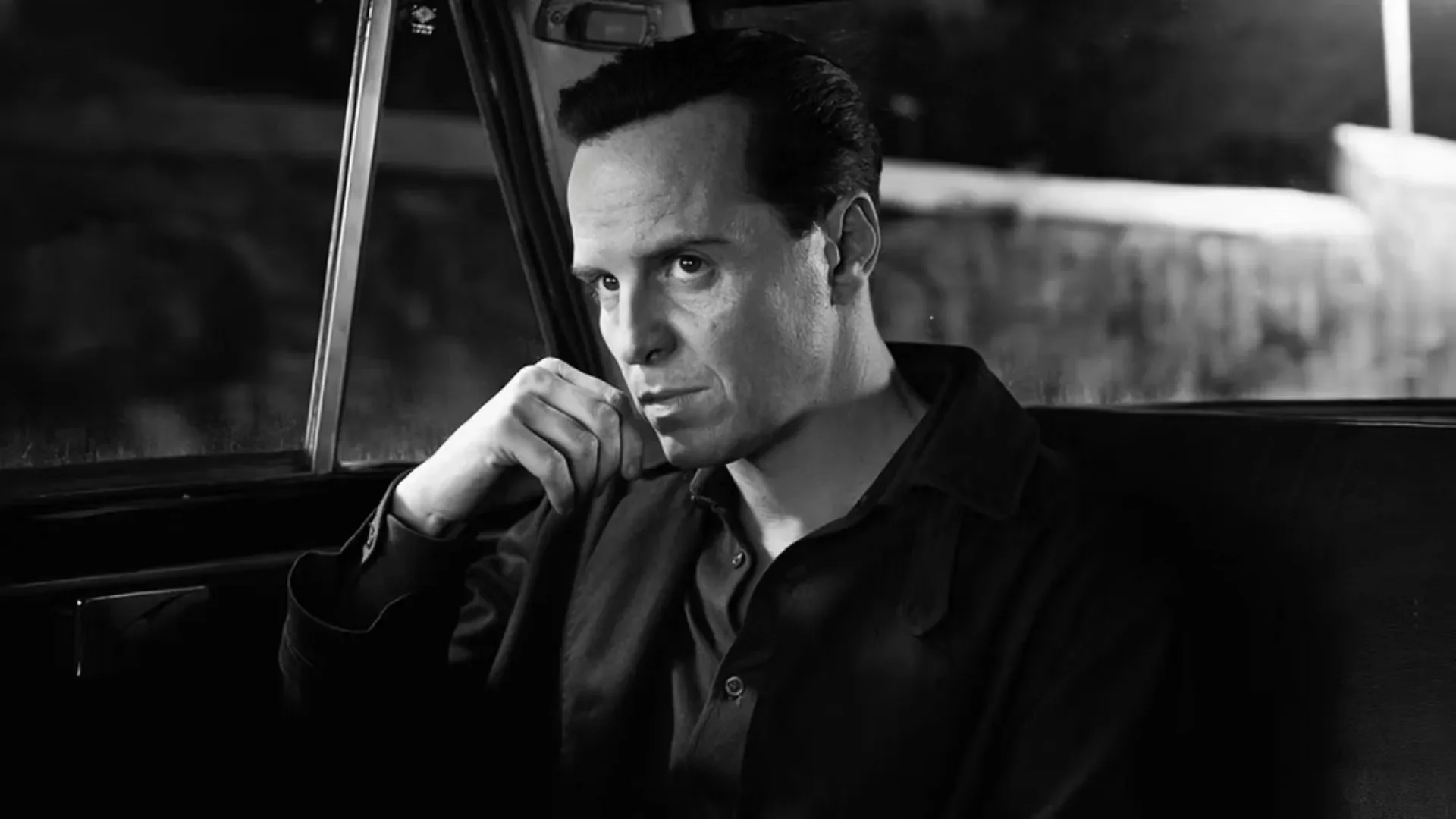
Andrew Scott in Ripley (2024). The series was shot on vintage, uncorrected spherical lenses that were rehoused for modern digital Arri cinema cameras. These older optical designs were chosen for their tactile micro-contrast, textured rolloff and disciplined chiaroscuro response, echoing the rendering characteristics of early Sonnar designs used in analogue portraiture. If I didn’t know it was shot on digital, I’d think it may be panchromatic film using a 1930’s Zeiss Sonnar lens, with a red filter.
These lenses form a technical bridge between analogue portraiture and motion-picture lighting systems. The rendering qualities that directors of photography seek for controlled contrast, expressive midtones and sculpted falloff are the same qualities your own workflow can use to support analogue chiaroscuro.
Always bear in mind: the camera body plays no role in this behaviour. Only the film, the lens, and the light shape the result. Look to lens systems first, and then work backwards to camera bodies. From there you will be in the right position to create the images that you see in your minds eye.
Building a Chiaroscuro Portrait: A Mechanical Process
Chiaroscuro is practical. It works on location, in a studio, in constrained indoor settings, or in improvised environments. The process is mechanical:
Determine source direction
High, lateral, or low depending on the desired structure.Place exposure for shadow density
Film latitude makes this predictable.Shape transitions
Adjust distance, modifier, falloff.Control the environment
Remove unwanted reflections.Reinforce the single-source logic
Do not add unmotivated light.Orient the subject
Face angle must match the directional design.
When the method is executed with discipline, the portrait gains architectural clarity. Depth becomes structured. Planes read correctly. The viewer interprets the image as cinematic not because it imitates a style, but because the lighting system is the same system used in film production and classical studio portraiture.
Film Response: Why Chiaroscuro and Celluloid Align
Chiaroscuro emerged in classical painting, but the technique became fully realised in cinema. Directors of photography such as James Wong Howe, Vittorio Storaro, Stanley Cortez and John Alton developed lighting systems built on motivated single-source illumination, disciplined falloff and strict spill control. Film rewarded this approach because its tonal structure relied on controlled highlights, rich shadow detail and stable midtones. These characteristics allowed chiaroscuro to become a longstanding cinematic standard.
The same principles apply in analogue portraiture today. Film responds predictably to directional light, recording the shape of illumination as physical density on the negative. When the lighting structure is intentional, the cinematic quality arises from function rather than stylistic imitation.
The portrait of Hellraiser actor Simon Bamford below illustrates this behaviour. The image is constructed with a single directional key light, while the opposite wall provides a controlled bounce that lifts the shadow plane without softening the chiaroscuro structure. The reflected light preserves texture on the darker side of the face, defines cheek and brow contours, and maintains a clear separation between illuminated and non-illuminated planes. This controlled use of bounce light mirrors mid-century motion-picture techniques, where shadows were treated as structural components, not as areas to eliminate.

A portrait of Hellraiser actor Simon Bamford, photographed on film using a single motivated key and natural wall bounce to shape the shadow plane. This approach—precise directional light, controlled falloff and readable density—follows the same chiaroscuro principles used in mid-century cinema and classical painting. The result is a structured, cinematic rendering built from light discipline rather than post-production.
This example demonstrates how analogue film, combined with intentional lighting design, produces the depth, dimensionality and tonal discipline associated with chiaroscuro across both portrait photography and classical cinema.
Where This Series Continues
This article forms the foundation of a larger series on directional light, tonal structure and controlled contrast on film. The next parts will move from principle to application: how shadow architecture is built, how modifiers define the geometry of a portrait, how metering decisions shape the negative, and how cinematic lighting systems from historical film production translate directly into contemporary still photography. Each section will expand the practical framework, building toward a complete, structurally coherent method for lighting portraits on film with precision and intent.
Part 2: Directional Light on Film: Building the Chiaroscuro Portrait (Part II)
Part 3: Chiaroscuro, Part III: Control, Containment, and the Discipline of Light (Part III)
By Martin Brown | Liquid Light Whisperer
The portrait of Simon Bamford shown in this article was developed and scanned in-house at Liquid Light Lab, the studio’s UK-wide 35 mm processing and scanning service based in Leamington Spa. The Lab handles ECN-2, C-41 and black-and-white workflows, including pyrogallol development for high-precision tonal control.