


Hellraiser Actor, Simon Bamford — A Portrait Session on Real Film
Across theatre, film, and television, Simon Bamford has built a career grounded in precision and physical awareness. Audiences know him first through the enduring imagery of Hellraiser and Nightbreed — roles that made him a figure within the language of British cult cinema — yet his roots are theatrical. Trained for the stage, his work is defined by an understanding of stillness: the ability to hold attention through exact posture and measured timing. That quality is rare; it cannot be taught quickly, and it photographs differently from performance designed for the screen.
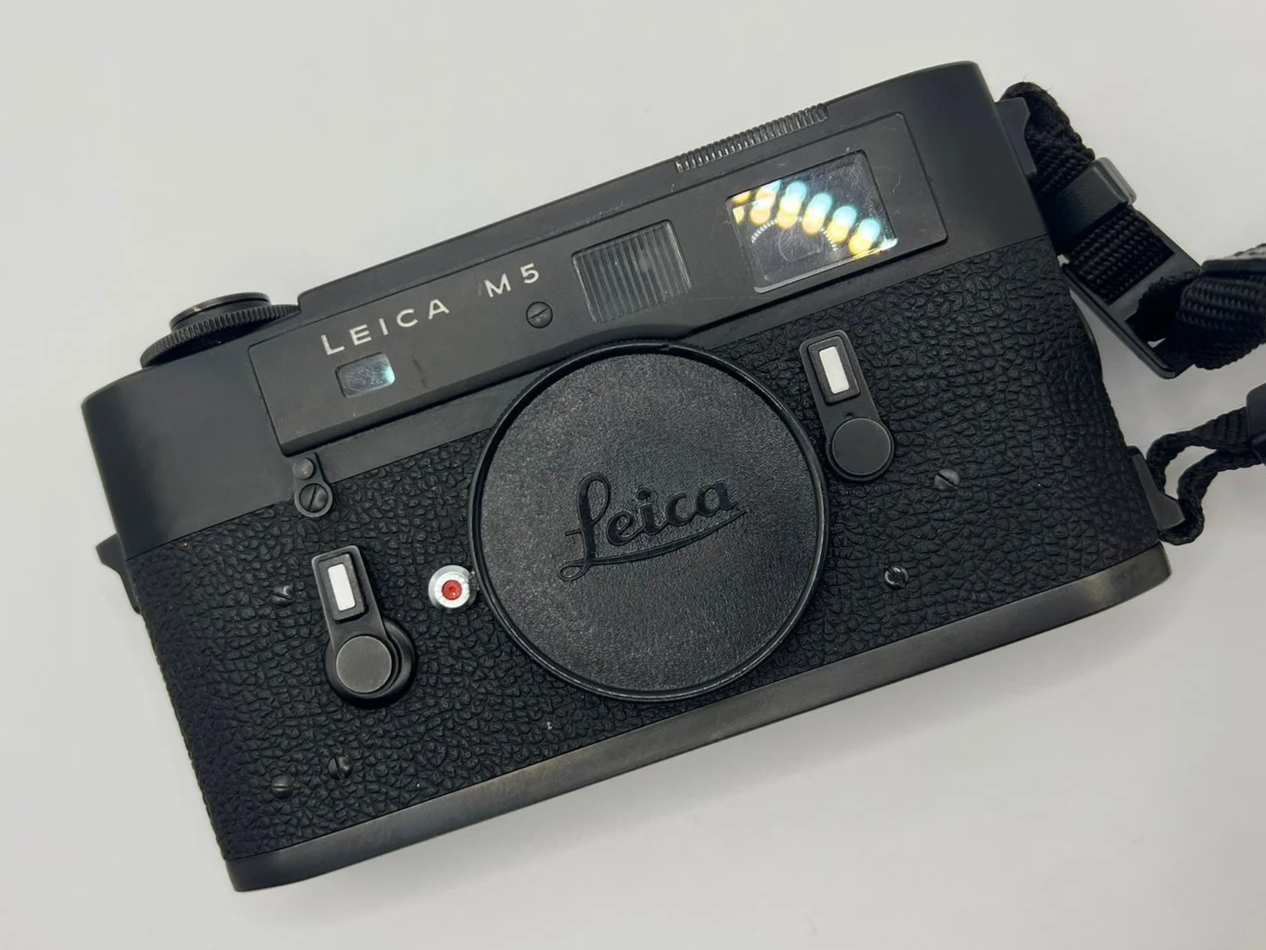
Leica M5 — The Last True Leica
Built between 1971 and 1975 in Wetzlar, the Leica M5 was the last M-series camera assembled entirely by hand under Leica’s traditional adjust-and-fit standard. Each body was finished, calibrated, and tested in the same small-team workshop system that had produced the M3, M2 and M4 — a method soon replaced by team-line assembly in Midland. When this process ended, so did the era of the “true” mechanical Leica.

Leica M3 Double Stroke Review — Precision, Permanence, Perfection.
The Leica M3 is the camera that changed how 35 mm rangefinders worked. It was the first Leica with a bayonet mount, the first with a single combined view and rangefinder, and the first that felt as if every control was designed around the photographer’s hand rather than the factory’s production line. Mine is a double-stroke version, serviced, used weekly, and it remains the most exact mechanical device I own. There are smoother cameras, lighter ones, quieter ones, but none that give the same sense of mechanical certainty.

Lomography Babylon 13 at ISO 6: Exploring Ultra-Low-Speed Mastery with a Leica M3 and 510 Pyro
Lomography’s Babylon 13 is already known as a strikingly low ISO black-and-white film, but pushing it further by rating it at ISO 6—or even ISO 3—invites a whole new level of experimentation for those of us who love the slow, methodical pace of analogue photography.