
The Cinematic Notebook
The craft behind our portraiture and film development.
How This Notebook Connects to Film Photography and Film Development
Every article in this archive reflects the full analogue workflow used by Liquid Light Whisperer and Liquid Light Lab — from motivated lighting and optical rendering through to controlled development and high-dynamic-range scanning. The same discipline documented here is applied to commissioned portrait work and to every roll processed in the lab.

Hellraiser Actor, Simon Bamford — A Portrait Session on Real Film
Across theatre, film, and television, Simon Bamford has built a career grounded in precision and physical awareness. Audiences know him first through the enduring imagery of Hellraiser and Nightbreed — roles that made him a figure within the language of British cult cinema — yet his roots are theatrical. Trained for the stage, his work is defined by an understanding of stillness: the ability to hold attention through exact posture and measured timing. That quality is rare; it cannot be taught quickly, and it photographs differently from performance designed for the screen.
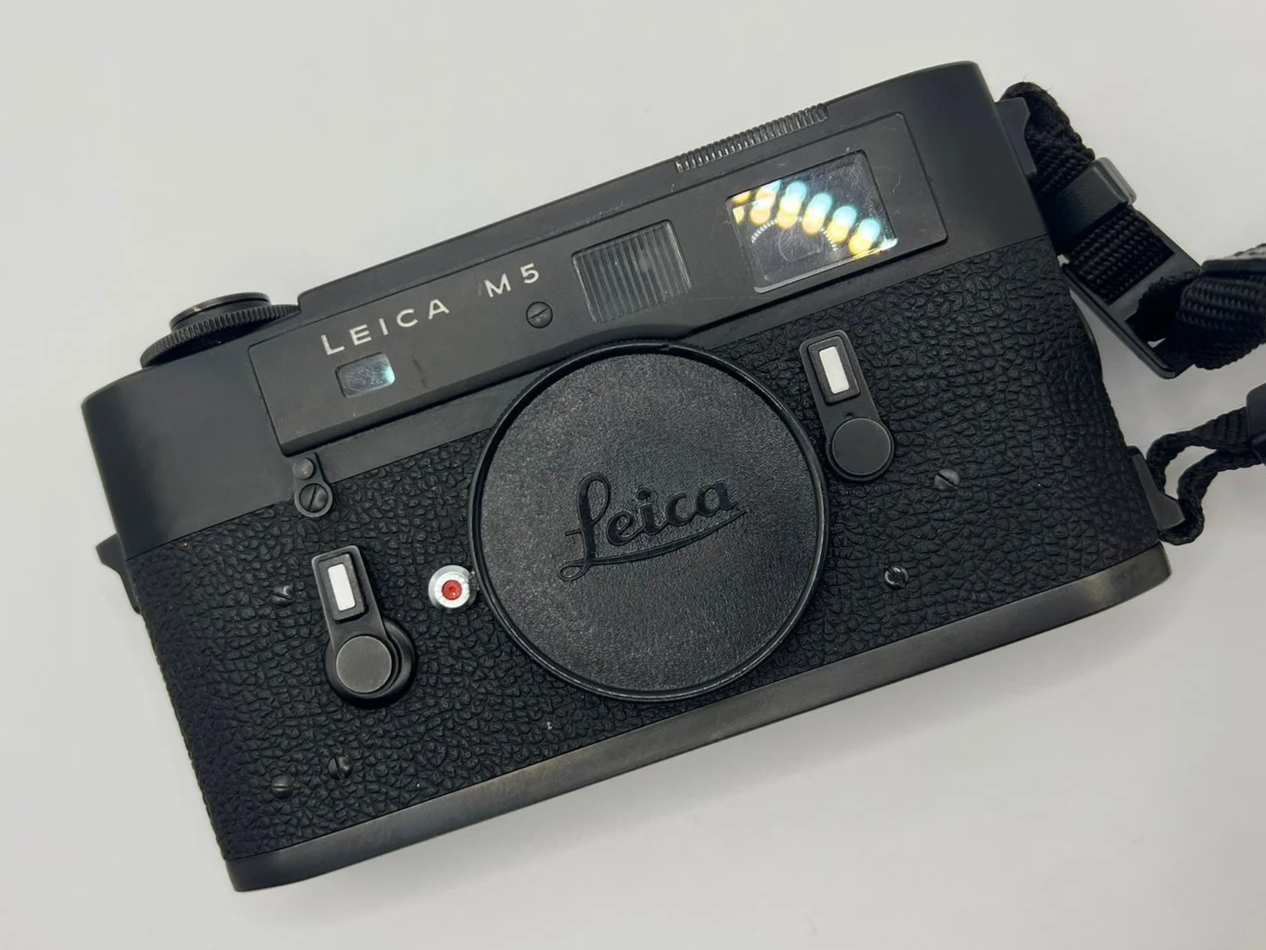
Leica M5 — The Last True Leica
Built between 1971 and 1975 in Wetzlar, the Leica M5 was the last M-series camera assembled entirely by hand under Leica’s traditional adjust-and-fit standard. Each body was finished, calibrated, and tested in the same small-team workshop system that had produced the M3, M2 and M4 — a method soon replaced by team-line assembly in Midland. When this process ended, so did the era of the “true” mechanical Leica.

Leica M3 Double Stroke Review — Precision, Permanence, Perfection.
The Leica M3 is the camera that changed how 35 mm rangefinders worked. It was the first Leica with a bayonet mount, the first with a single combined view and rangefinder, and the first that felt as if every control was designed around the photographer’s hand rather than the factory’s production line. Mine is a double-stroke version, serviced, used weekly, and it remains the most exact mechanical device I own. There are smoother cameras, lighter ones, quieter ones, but none that give the same sense of mechanical certainty.

Leica’s Legendary Craftsmanship: From Barnack’s Vision to the M5 and M6.
Leica’s Legendary Craftsmanship: From Barnack’s Vision to the M6. From the full frame size of a digital sensor, to 36 rolls of film in a cannister - 35mm photography begins with Oskar Barnack.

The Creation of 35mm Photography: Oskar Barnack’s Vision and the Leica Legacy
From the earliest days of photography, cameras were hefty, complicated devices. Plates were large and unwieldy, limiting both portability and the opportunities to shoot spontaneously. Oskar Barnack (1879–1936), an ingenious optical engineer at Ernst Leitz Wetzlar in Germany, would change all of that forever.