

Revisiting the AGO Film Processor — Long-Term Use, Travel Work, and Field Reliability
After publishing my original review, the AGO Film Processor quietly crossed an important threshold for me: it stopped being a capable home-development solution for family photographs and became my default processor for location work. That shift only happens when a tool proves itself repeatedly under pressure, away from controlled conditions, with real deadlines attached. Over the past months the AGO has travelled with me across Dartmoor, Yorkshire, Exmoor, North Wales and Scotland on a series of commissioned shoots where turnaround time, consistency and self-reliance mattered more than convenience.
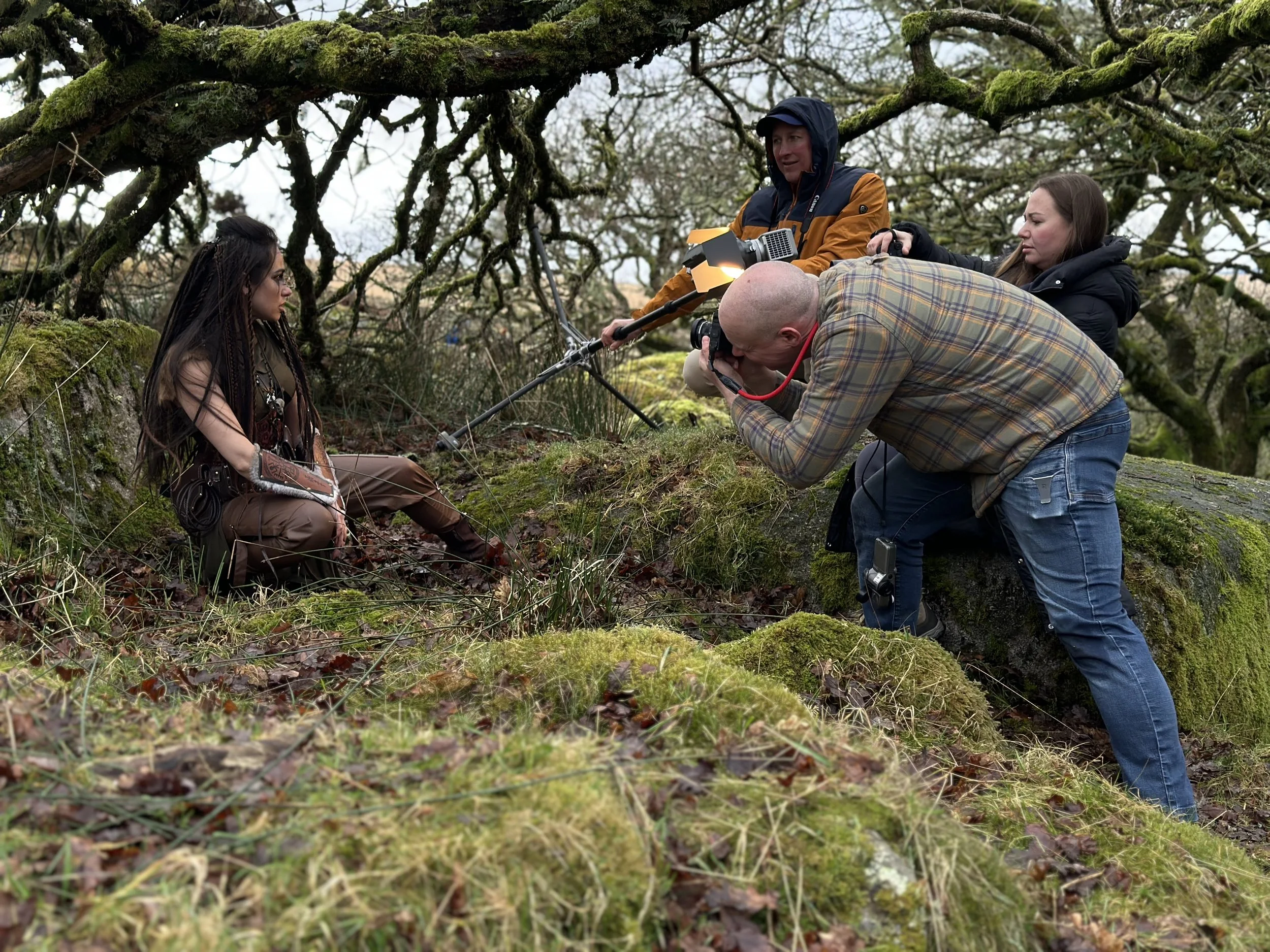
During this Dartmoor location shoot, the AGO Film Processor moved from a capable home solution to a professional, location-ready processing tool within my working workflow.
When I travel, the kit is deliberately minimal and deliberate. The AGO, a two-reel and five-reel Paterson tank setup, and a portable scanning solution that matches my rendering standards. That combination allows me to expose, process and deliver work while still on the road, rather than deferring development until I return to the studio. For a working photographer, that changes what work you can realistically accept. I have won projects specifically because I could guarantee controlled processing and fast delivery without relying on being in my own Liquid Light Lab or shipping film back across the country.
In practical terms, the AGO excels in travel conditions because it removes variables rather than adding them. Temperature drift, inconsistent agitation and mental load are all things that compound when you are tired, moving locations daily, or working in unfamiliar environments. The AGO’s compensation engine and constant rotary agitation mean the process behaves the same way in a cottage in Dartmoor as it does on the coast of Scotland, or the mountains of North Wales. The negatives look like they should, every time, and that reliability is what matters.
The Coupler Failure – and the Response That Mattered
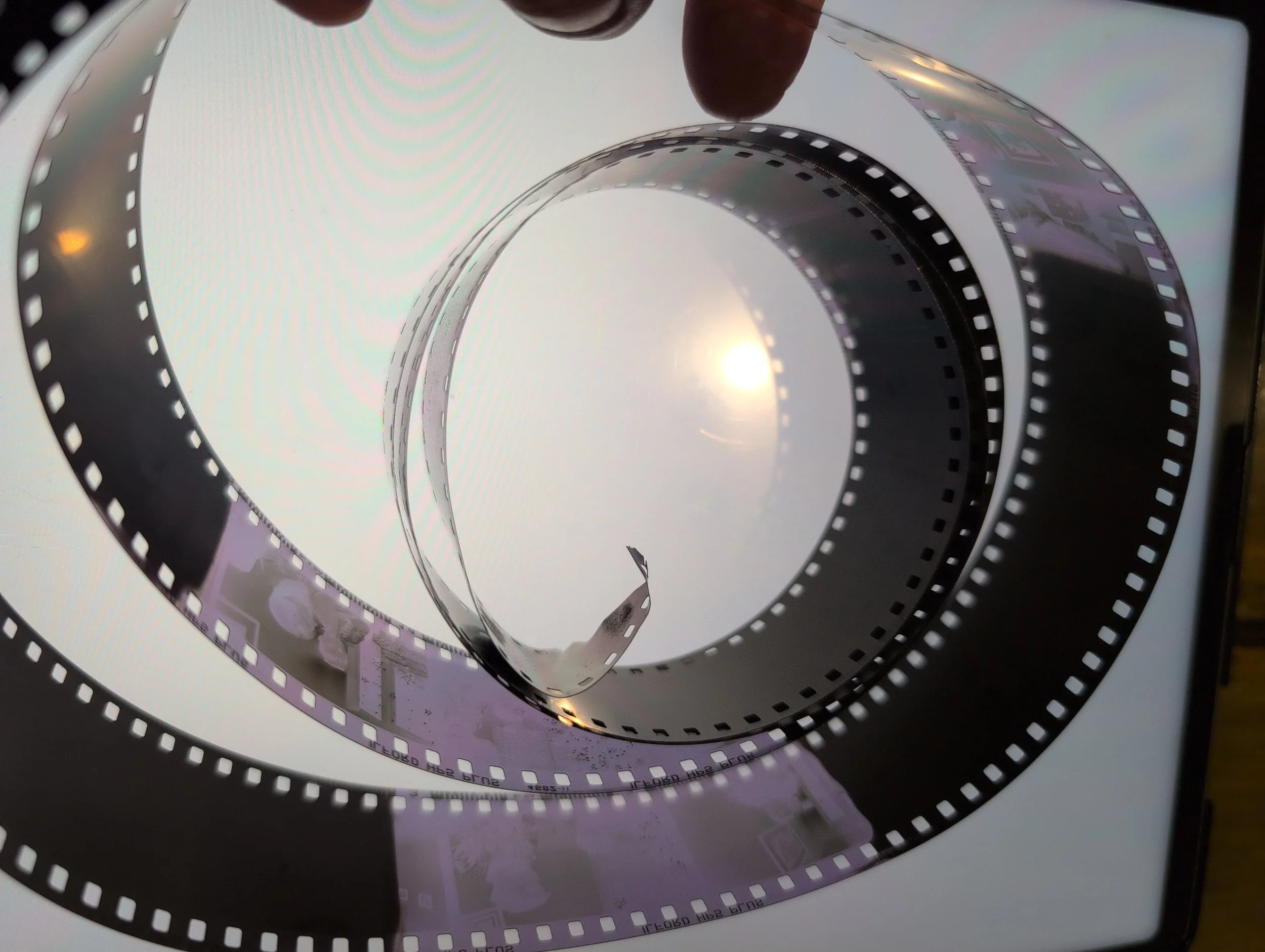
Film showing the result of a drive coupler failure during processing: the reel stopped rotating mid-cycle, leaving the film stationary in the developer to produce a clearly defined, uneven development pattern where agitation ceased.
The one serious issue I reported previously did escalate. The drive coupler detaching is not a theoretical flaw; it will leave the developing reel stationary inside the tank if it comes off mid-cycle. This is not something to gloss over. When you are processing important work on location, mechanical certainty matters.
What followed, however, is worth documenting clearly. I contacted Vintage Visual directly. The response was immediate, professional and decisive. A replacement unit was shipped from Estonia and arrived in my hands in under one business day. That is not hyperbole. It is the fastest international fulfilment I have ever experienced, and it stands out even more when compared to my usual experience importing cameras and lenses from Japan, where speed and care are typically the benchmark. Imports I have made from Germany, Austria, France, Italy and Ukraine have never matched this turnaround.
That level of support matters. Equipment fails; what defines a manufacturer is how they respond when it does. In this case, the response restored confidence immediately.
Battery Life, Programming, and Real-World Endurance

The AGO Film Processor during an extended black and white development run, with the working solution drifting to 21 °C and the system automatically compensating in real time to maintain correct effective development.
The replacement unit went straight into testing. Within an hour I had over thirty custom programmes loaded, covering multiple black and white stocks, ECN-2, C-41, and a full range of push and pull variants. The programming interface, which initially felt utilitarian and slightly awkward, no longer registers as a problem. Once you understand its logic, it becomes a repeatable, almost mechanical process. It rewards well researched development cycles for your film and developer choices with high quality negatives, which is exactly what you want in a processor.
One test run involved a +2 stop push requiring a 28-minute development time. After several hours of cumulative testing that day, the battery indicator still showed 75% remaining (or 3 bars out of 4). For travel work, this is critical. Battery dependency is often the weak link in portable systems; here it has become one of the AGO’s strongest assets. I no longer ration usage or plan processing around charging windows. It simply runs.
Just as importantly, I have yet to see a single case of under- or over-development on any film processed with the AGO, whether at home or on location. That statement spans standard development, extended push processes, and long black and white runs where drift would normally show itself. The negatives are consistent, edge-to-edge, roll-to-roll.
What Changed in Practice
What ultimately changed was not image quality in isolation, but decision-making. Before the AGO became part of my travel kit, film exposed on location was a deferred problem: something to be solved later, back in the studio, with time lost and momentum broken. With the AGO operating reliably in the field, exposure, development, and scanning became part of a single, continuous workflow rather than separate stages divided by geography.
That shift matters professionally. It allows film to function on the same temporal footing as commissioned work demands, without compromising process control. Development is no longer an act of recovery after the shoot, but an immediate continuation of it. When processing behaves predictably across changing environments, film stops being fragile in logistical terms and becomes operationally robust.
This is the point at which a processor stops being equipment and becomes infrastructure. Not because it removes decision-making, but because it allows decisions to be made earlier, with confidence, and acted upon immediately.
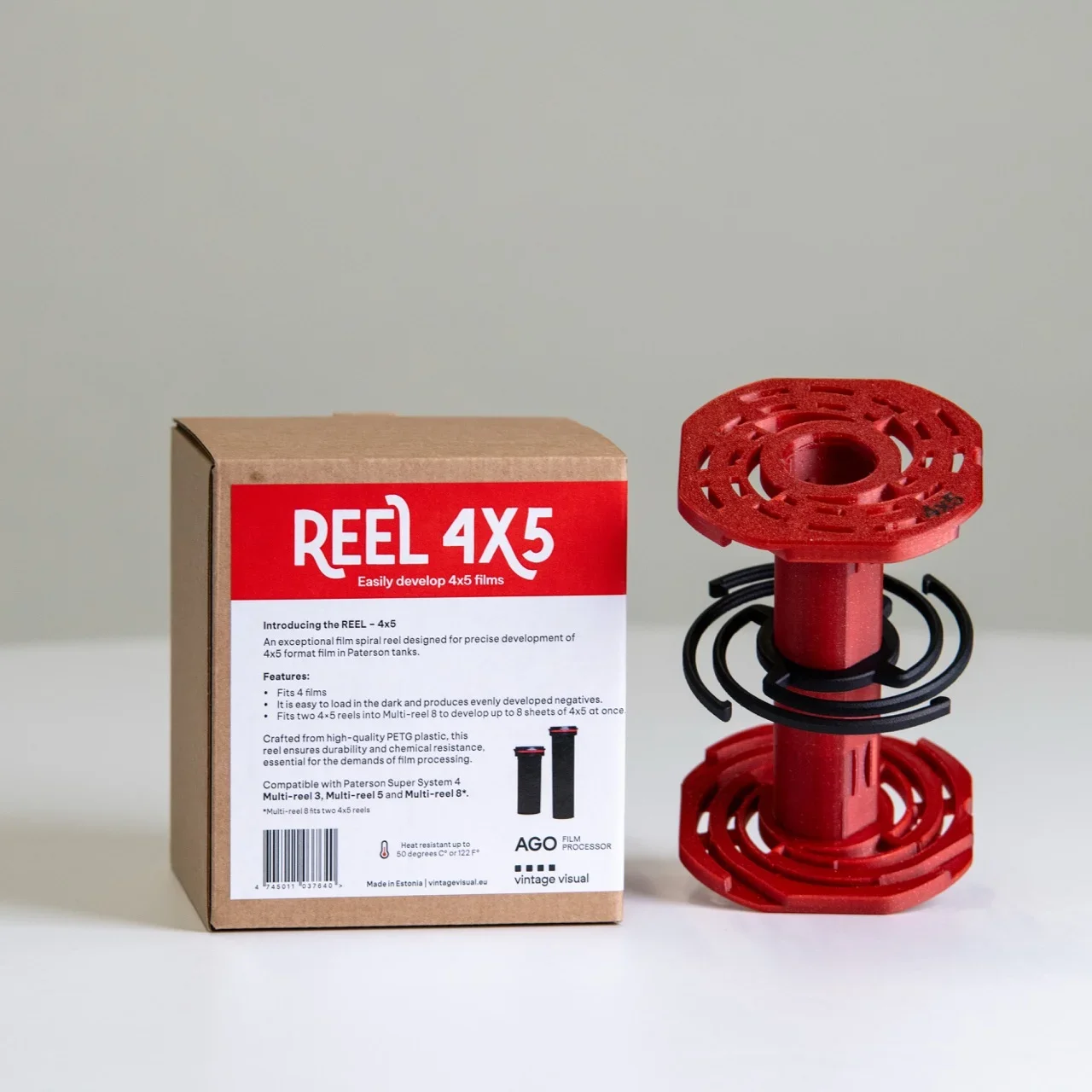
The AGO 4×5 reel integrates large-format sheet film processing into the development system.
Looking Ahead: Large Format Integration
For large format work, I will be moving away from the Stearman Press SP-645 Compact 4×5 Film Processing System (six-sheet version) in favour of the new AGO 4×5 reel. The reason is simple: the same logic that makes the AGO indispensable for roll film applies even more strongly to sheet film. Long development times, sensitivity to temperature drift, and the need for repeatability across projects all point towards a rotary, compensated system rather than manual inversion or tray-based workflows. Consolidating roll and sheet processing onto one platform also simplifies travel load, luggage space is freed up, and it reduces cognitive overhead over days of work.
I will be returning to the AGO in a future article to assess its large-format workflow, including the new 4×5 reel, once it has been fully integrated into my field and studio processes.
Closing Assessment
The AGO Film Processor has moved beyond being a “very good” home processor. It has become a working tool that enables a different way of operating as a photographer. It allows me to take on location-based projects with confidence that the film will be processed correctly, immediately, and to my standards, regardless of where I am. That capability has direct professional value.
There are still things I want to see improved mechanically, and I will continue to be explicit about them. But judged on what matters most—negative quality, repeatability, endurance, and support—the AGO is the strongest product to hit home and location film processing in a long time.
All images were developed with the AGO, and then scanned in-house at Liquid Light Lab, Leamington Spa.
By Martin Brown | Liquid Light Whisperer