

Why Film Scans Look Different From One Film Lab to Another
If you are choosing a film lab, scanning quality matters as much as development. A negative can be exposed correctly, processed correctly, and still be delivered as a weaker image if the scanning stage does not extract the full detail, colour information, and tonal depth recorded in the film. This is why film scans can look very different from one lab to another.
Some scans appear softer, flatter, or more compressed. Others retain clearer detail, smoother highlight behaviour, stronger tonal separation, and more convincing colour. In many cases, the difference is not the film stock and it is not the exposure. The difference is how the negative is scanned.
At Liquid Light Lab in the UK, this is one of the most common questions photographers ask when comparing film scans from different labs. The answer is straightforward. Once a roll has been developed, the photograph is already present in the negative. What changes from one lab to another is how accurately that negative is extracted into the final file.
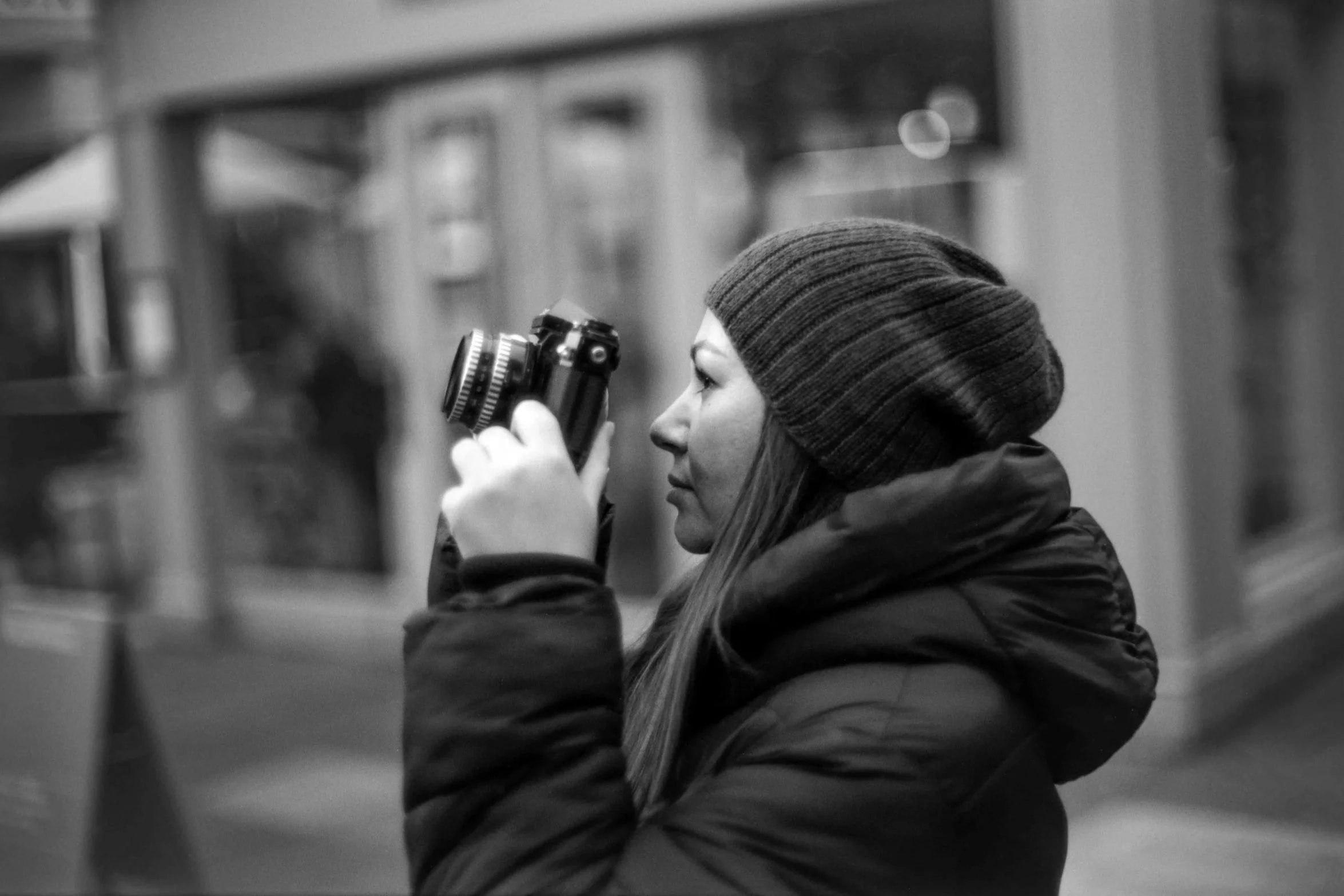
The moment the shutter closes, the photograph is already in the film. What happens next depends on where that roll is developed and scanned. Send your film to Liquid Light Lab and see the full detail your negative recorded.
The Photograph Is Already in the Negative
Once film has been developed, the image already exists in the emulsion. Fine detail, grain structure, highlight information, tonal transitions, shadow separation, and colour relationships have all been physically recorded in the negative.
The role of film scanning is not to invent the photograph. It is to extract the image that is already there. The quality of that extraction determines how much of the negative survives into the scan the photographer receives for editing, printing, archiving, or delivery.
This is why the scanning stage matters so much. If the negative is examined carefully, the final file can retain more of the detail, tonal depth, and highlight structure recorded at exposure. If the scan is made through a system built primarily for speed, the resulting image may carry less of that information, even though the negative still contains it.
Why Film Scans Vary Between Labs
Different labs are built around different priorities. Some are designed for fast throughput, moving film quickly through automated scanning systems that standardise output at volume. That can be efficient, but it does not always produce the most complete extraction of the negative.
When scanning is built around speed and broad automation, the file can lose some of what makes the negative distinctive. Fine detail may appear softer. Grain can become less coherent. Tonal transitions may feel less subtle. Highlight information can become tighter and less open. Colour can look more generic than the negative itself supports.
That does not mean the film has failed. It means the scan has not fully carried the structure of the negative into the delivered image.
For photographers, this matters because the scan is usually the working photograph. It is the file used for selection, grading, printing, and final use. If the scan is weak, the image appears weak, regardless of what the negative actually recorded.
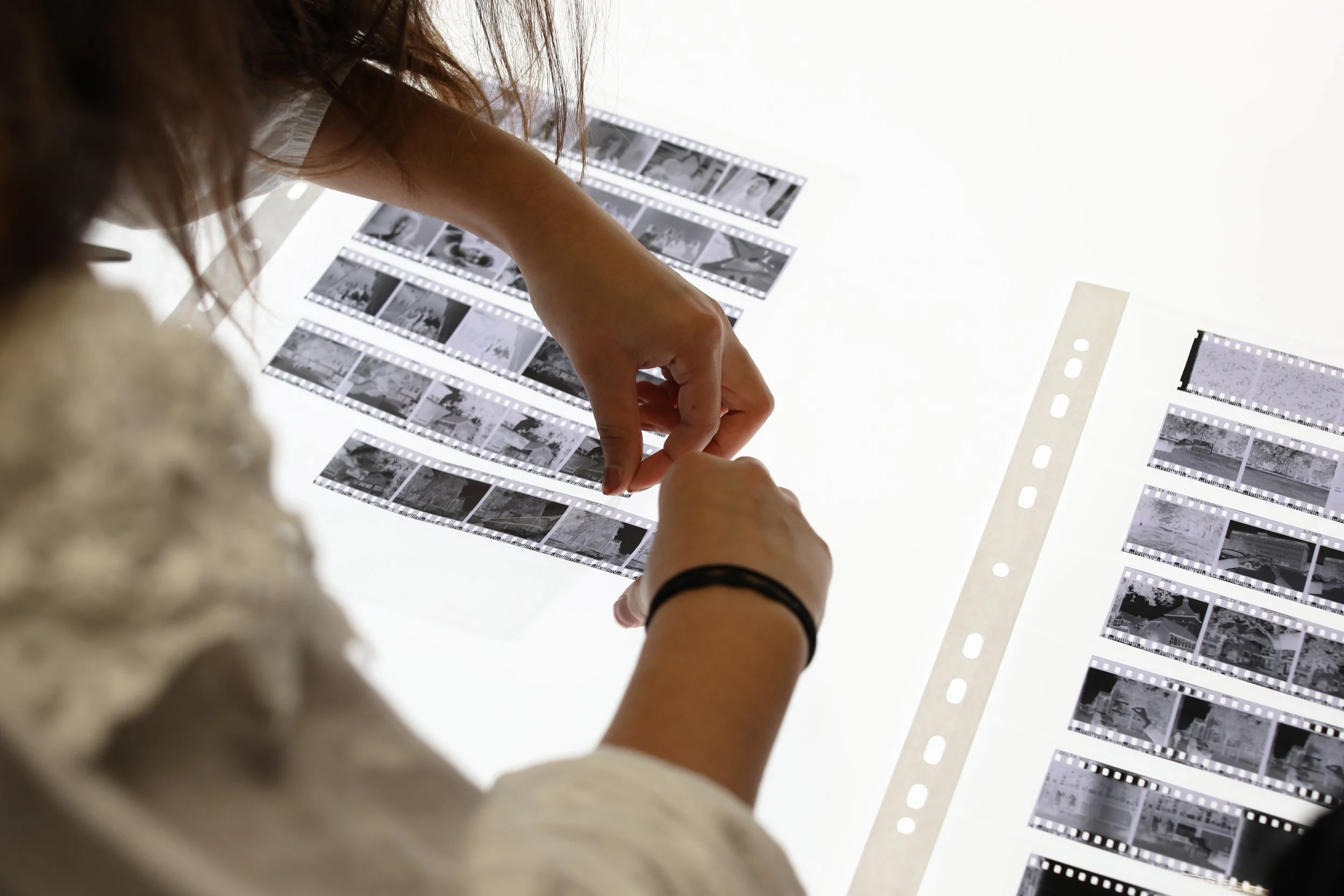
35mm colour negative film awaiting scanning at Liquid Light Lab in the UK. Once processed, the photograph is already present in the negative. Film scanning determines how completely that image is extracted.
What Affects Film Scanning Quality
Film scanning quality depends on a small number of technical factors, and the way a lab controls them has a direct effect on the final result.
The first is film flatness. If the negative is not held consistently flat, sharpness and detail stability can change across the frame. The second is illumination. The way light passes through the negative affects how density, colour, and tonal transitions are read. The third is optical alignment. If the relationship between film, lens, and capture plane is not tightly controlled, the scan cannot extract the negative with full consistency. The fourth is automated correction. Systems built around standardised output often impose broad assumptions on contrast, density, and colour, which can reduce the individuality and tonal depth present in the film.
These factors explain why one lab’s negative scans can look more open, more detailed, and more tonally complete than another’s. The difference is often technical, not cosmetic.
Why This Is More Visible With Fine Films
The differences between labs become easier to see with films capable of holding very fine image structure. Slower emulsions such as ISO 50 and ISO 100 films can record remarkable detail, but that detail only appears properly when the negative is sampled with enough precision to resolve it.
The same applies to delicate highlight transitions, low-contrast textures, subtle skin tones, and smooth mid-tone movement. If the scanning stage is careless or too heavily automated, that refinement is reduced. The file may still look acceptable, but it will not reflect the full quality of the negative.
This is one reason photographers sometimes feel that scans look slightly muted even when the exposure and development were correct.
The Liquid Light Chamber
At Liquid Light Lab, negatives are not passed through a high-speed scanning line designed around throughput. Each frame is positioned individually within the Liquid Light Chamber, a proprietary extraction system developed specifically for reading photographic negatives with greater precision.
The Liquid Light Chamber was built to control the variables that matter most in negative scanning: film geometry, illumination behaviour, and optical alignment. Each frame is held within a calibrated optical plane and examined under fixed, repeatable conditions so that the relationship between film, light, and optics remains stable from one frame to the next.
That control produces a visible difference in the final scan. Fine detail is resolved more clearly. Grain structure remains more coherent. Highlight transitions stay smoother and less abrupt. Tonal separation is preserved more effectively across the frame. The delivered file retains more of the image already present in the negative rather than reducing it through generic handling.
The purpose of the Liquid Light Chamber is simple. It exists to extract the negative with technical precision so that the final scan reflects the photograph the film actually recorded.
Each frame is examined individually within the Liquid Light Chamber at Liquid Light Lab. Controlled film flatness, illumination, and optical alignment allow more precise extraction of detail, grain, and tonal structure.

Different negative types demand the same precision at the scanning stage. Whether the film is C-41, ECN-2, or black and white, the final image depends on how accurately the developed negative is examined and extracted.
Why This Matters for C-41, ECN-2 and Black and White Film
This matters across all major negative types. C-41 colour negative film benefits from scanning that preserves colour separation, detail, and highlight behaviour. ECN-2 motion picture stocks benefit from controlled extraction that respects their tonal range and density structure. Specialist black and white films benefit from scanning that holds fine texture, local contrast, and tonal layering without flattening the image.
Film development and film scanning therefore need to be treated as one connected workflow. A negative may be developed correctly, but if the scanning stage is weak, the file delivered to the photographer will still fall short of the image contained in the film.
Choosing a UK Film Lab for Development and Scanning
When choosing a UK film lab, the question is not only whether the lab can process the roll. The question is also how the negative will be scanned once development is complete.
If the scanning stage is built around speed and standardisation, the final file will reflect that. If it is built around careful frame-by-frame extraction, controlled illumination, stable geometry, and optical precision, the result will be different. That difference is why film scans can look so different from one lab to another.
Liquid Light Lab was built for photographers who want the scanning stage taken as seriously as the chemistry. The lab processes C-41 film, ECN-2 film, and black and white film, with each negative scanned through the Liquid Light Chamber so that detail, tonal depth, and image structure are extracted with precision.
Film Development and Negative Scanning Across the UK
Liquid Light Lab accepts film by post from photographers across the UK and provides film development and scanning through a tightly controlled workflow. If you want your negatives developed and scanned with greater precision, the lab page includes current services, posting details, turnaround information, and booking options for sending film directly to the lab.
By Martin Brown | Liquid Light Whisperer